
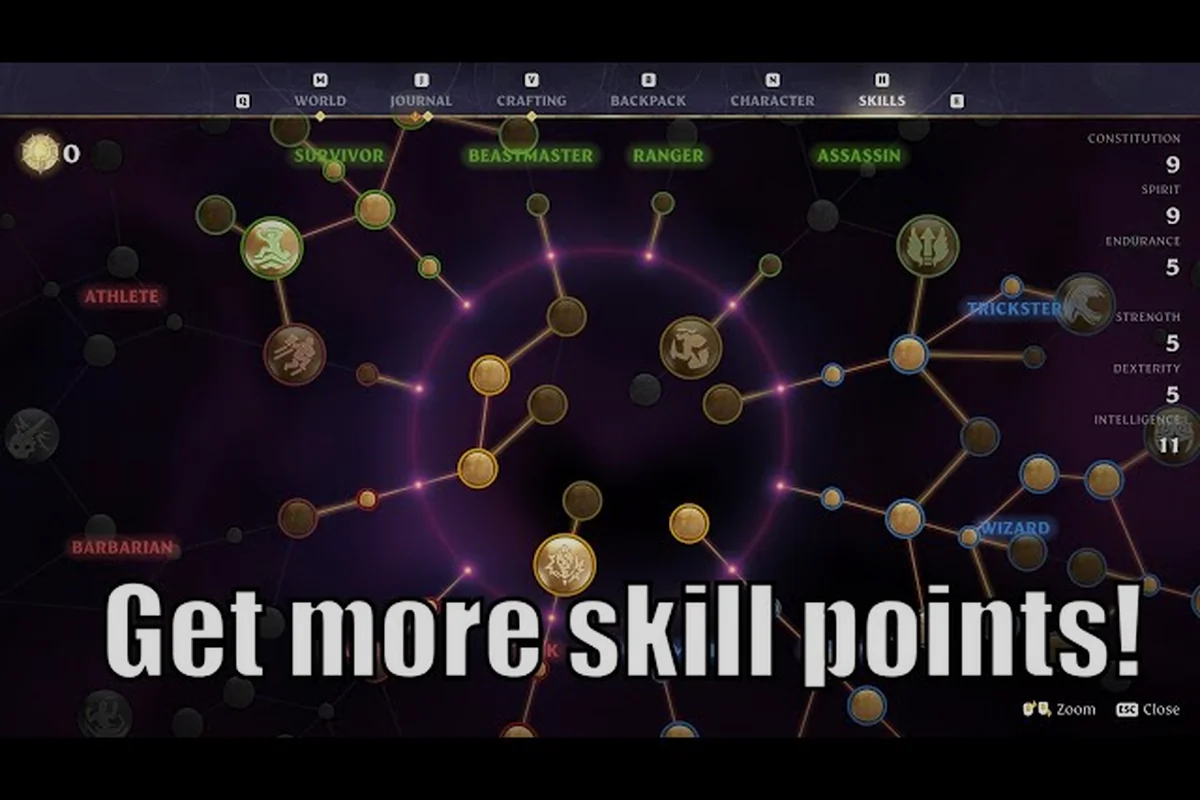
Reaching the level 50 cap in Enshrouded is less about grinding mobs and more about chaining the right activities in the right order. This Enshrouded leveling guide breaks down where XP actually comes from, how skill points stack up, and which starting build carries you from the first Flame Altar to the endgame without a respec.
Enshrouded’s leveling pace is driven primarily by XP earned from combat, quests, and exploration, with the official Steam news updates often detailing balance changes that can affect how quickly players progress through the skill tree.
For the most accurate and up-to-date details on XP curves, level caps, and skill point rewards, players can consult the Enshrouded 1.0 announcement archive, which documents patch notes and progression changes directly from the developers.
How XP and Leveling Actually Work in Enshrouded
The 1.0 changelog confirms the maximum player level is 50, with equipment upgradeable to gear level 55. That gap matters: your character level gates which gear tiers you can equip, so falling behind on XP quietly locks you out of the best weapons and armor you're already finding.
XP flows from several sources, but they are not equal. Quest completion, Shroud Root clearing, and elixir well activation pay far more than killing random mobs, which is why efficient players treat combat as a means to reach objectives rather than the objective itself. Early-game recipes were also reworked in 1.0 to cut grind, and the first level-up now triggers when you place your first Flame Altar — so your progression literally starts with base setup.
Here's how the main XP sources compare in practice: main quest steps deliver the largest single chunks of XP and are strictly one-time, so they front-load your early levels fastest. Shroud Root clearing and elixir well activation rank just below quests but pull double duty — Roots burn away the Shroud fog and unlock traversal routes, while wells double as respawn anchors you'll want anyway. Named and boss enemies sit at medium-high value and are partly repeatable, making them the best farm when routed efficiently, whereas resource gathering and random mob kills trickle in low XP and only pay off as passive gains while you craft or travel between objectives.
| XP Source | Relative Value | Repeatable? | Notes |
|---|---|---|---|
| Main quest steps | Very high | No | One-time, front-loaded rewards |
| Shroud Root clearing | High | No | Also clears fog and opens routes |
| Elixir wells | High | No | Doubles as respawn anchors |
| Named/boss enemies | Medium-high | Partly | Best farmed with a route |
| Resource gathering | Low | Yes | Passive XP while crafting |
| Random mob kills | Low | Yes | Slowest reliable method |
The takeaway is simple: quests and Shroud Roots are your XP engine, and everything else is filler. If you ever feel stuck at a level wall, you are almost certainly ignoring a quest chain or an uncleared Root nearby. Concretely, the fastest fix is to open your journal and scan for any incomplete main quest step in a region you've already unlocked — those one-time chunks routinely hand you a level or more, whereas grinding random mobs for the same XP can take an hour of pointless combat. Shroud Roots are the other half of that engine: each one you burn not only pays out a high, non-repeatable XP sum but also lifts the Shroud fog over its area, revealing the elixir wells and quest NPCs you'd otherwise walk past. That's why the two feed each other — clearing a Root exposes the objectives that then pay you again. So before you blame your build or respec your skill points, check the map for greyed-out Root markers and unfinished quest icons; nine times out of ten the level wall is a navigation problem, not a power problem.
Why the Level Cap Changed the Math
Before 1.0, players could over-level content comfortably. With the cap at 50 and gear at 55, the endgame assumes you arrive near the ceiling. That means the last ten levels are the most valuable ones you'll earn, and the activities that grant them — late biome quests, Cinder's Cradle content, and deep Shroud runs — should not be skipped in favor of base decoration.
Enshrouded How to Get Skill Points: Every Source Explained
Skill points are the real currency of character power, and the Enshrouded skill points guide question players ask most is simply where they come from. The answer is straightforward: you earn one skill point per character level, plus a small number of bonus points from specific quest rewards and collectibles scattered through the world.
Because points are tied to levels, anything that accelerates XP also accelerates your build. That's why the leveling and skill point systems are really one system wearing two hats. If you want the deeper breakdown of point sources and respec costs, the skill point farming breakdown covers the edge cases, including the handful of points that don't come from leveling at all.
A practical way to think about it: treat every skill point as a non-refundable investment until you unlock the respec option at the Flame Altar, which costs Runes to reset. Early on, a single misplaced point in a tree like Healer or Wizard can delay your core damage or survivability node by several levels, since you only gain one point per character level. That's why mapping your intended build before level 10 — and banking points when you're unsure — beats spending them reactively after a tough Shroud encounter.
-
Levels 1-10 give you roughly ten points — enough to commit to one archetype's core.
-
Levels 11-30 are the mid-game bulk, where most builds come online.
-
Levels 31-50 are where you round out secondary trees and capstone nodes.
Community data suggests most players finish the main story somewhere in the 30s, meaning the final stretch to 50 is optional power for those who want it. There's no penalty for arriving at the cap late, but there is a penalty for spreading points thin early.
Do You Ever Get Points Outside Leveling?
Yes, but rarely. A few quest rewards and world collectibles grant bonus skill points, and these are worth grabbing because they're effectively free levels. Treat them as a bonus, not a plan — the overwhelming majority of your points come from the level track.
Enshrouded How to Level Up Fast: A Practical Route
If you want to level up fast, stop wandering and start routing. The most efficient approach chains three activity types in a single loop: pick up a quest cluster, clear the Shroud Roots along the path to it, and activate any elixir wells you pass. This triple-dips XP while also unlocking fast travel and clearing fog, which makes every future trip shorter.
| Phase | Levels | Primary Activity | Secondary Focus |
|---|---|---|---|
| Opening | 1-8 | First Flame Altar + Springlands quests | Gather basic materials |
| Early climb | 9-18 | Revelwood quest chain | Clear nearby Shroud Roots |
| Mid game | 19-30 | Nomad Highlands + Kindlewastes | Elixir wells, named enemies |
| Late climb | 31-42 | Albaneve Summits content | Boss routes, gear upgrades |
| Cap push | 43-50 | Cinder's Cradle + deep Shroud | Repeatable high-value loops |
The single biggest speed mistake is fast-traveling past Shroud Roots. Each Root is a one-time XP payout plus permanent map value, and skipping them to save five minutes costs you a level's worth of progress over a full playthrough.
Stacking XP With Efficient Combat
Combat XP is small per kill, but it adds up when you fight on the way to something else. Use the grappling hook and glider to move between objectives instead of walking, then clear only the enemy camps that sit directly on your route. According to the official Steam page, traversal tools like the grappling hook and glider are core to how the game is meant to be played, and using them aggressively is both faster and safer than ground-level fighting.
Enshrouded Best Starting Build for New Players
Your first skill points should go into one archetype, not three. The three trees — Juggernaut, Ranger, and Battlemage — each reward depth, and a scattered build feels weak at every level. For most new players, a melee-leaning start is the safest because it needs the least gear investment to function.
| Archetype | Early Strength | Gear Dependency | Beginner Friendliness |
|---|---|---|---|
| Juggernaut (melee) | High survivability | Low | Very high |
| Ranger (bow) | Safe ranged damage | Medium | High |
| Battlemage (magic) | Strong AoE later | High | Medium |
A solid opening allocation looks like this: for a Juggernaut start, drop your first 5 points into the melee damage node, then 2 into Constitution for the HP buffer that keeps you alive through the early Shroud zones, and 1 into the stamina node so you can actually dodge Fell enemies instead of standing still. That 8-point spread carries you comfortably to level 10, where you'll have enough points to branch into a defensive passive without starving your core damage.
-
Put your first 5-6 points into your chosen tree's core damage node.
-
Take one defensive node so early mistakes don't one-shot you.
-
Grab a movement or stamina node to make traversal and dodging smoother.
-
Ignore hybrid nodes until you're past level 20.
If you're still deciding between trees, the archetype comparison guide walks through how each one scales into the endgame, which matters because a build that's fine at level 10 can fall apart at 40.
When to Respec
Respecs exist but cost resources, so the goal is to avoid needing one. Committing to a single tree through level 20 keeps you functional, and by then you'll have enough points to branch into a second tree deliberately rather than accidentally. The most common regret players report is dumping points into three trees before level 15.
Enshrouded Quest Guide: Why Quests Beat Grinding
Quests are the backbone of fast leveling because they bundle XP, gear, and survivor unlocks into single objectives. The main quest line also gates major systems — the glider, the grappling hook, and access to new biomes — so following it isn't just efficient, it's mandatory for progression.
A few quest habits that pay off: chain objectives within a single biome so you're not burning run time shuttling back to the Flame Altar, and prioritize quests that reward skill points directly — the Flameborn's early power spike comes from stacking those points into a focused build rather than spreading them thin. If you're hunting how to get skill points fast, note that many side quests hand out points as a fixed reward instead of raw XP, so they're worth grabbing even when the XP bar barely moves.
-
Complete side quests in the same biome before moving on — travel time is the hidden cost.
-
Rescue survivors when quests point you to them, since they unlock crafting stations you'll need.
-
Bank quest turn-ins if you're close to a level, so the XP lands where it helps most.
-
Check the journal regularly for objectives you've already half-finished.
The community wiki is upfront that its quest and mechanic data is community-maintained, which means it can lag behind 1.0 changes — a nerf to a side quest's XP payout or a shifted skill point reward may not be reflected for weeks. Treat any specific level requirement, XP value, or reward listed there as an estimate rather than gospel. For anything build-critical — like confirming whether a quest actually grants the skill points your best starting build depends on, or verifying a Flame Altar upgrade material — cross-check it in-game before committing your route.
Chaining Quests With Shroud Roots
The strongest pattern is to accept a quest cluster, then clear every Shroud Root between your current position and the quest marker. This turns a single trip into two XP payouts plus fog clearing. Over a full playthrough, this habit alone can account for several levels of difference compared to players who beeline objectives.
Common Leveling Mistakes That Slow You Down
Most slow leveling comes from a handful of fixable habits. The first is over-grinding mobs — killing everything in sight feels productive but pays poorly compared to a single quest turn-in. The second is ignoring the Flame Altar upgrades, which limit how far you can operate from base and force long walks that waste time.
Other frequent issues: spending skill points before you understand the tree layout. Each level grants a single point, and the Flameborn skill tree splits into three branches — so a level 10 character who has scattered points across all three ends up with no tier-2 node unlocked and no synergy bonus active. Respec costs a Skill Reset Flask, which is scarce early on, so treat your first 10 points as a commitment.
-
Spreading skill points across all three trees before level 20.
-
Skipping elixir wells, which are both XP and free fast-travel anchors.
-
Hoarding materials instead of crafting gear that keeps you alive in higher biomes.
-
Avoiding the Shroud entirely, which cuts off a major XP and resource stream.
Fixing these four habits typically speeds up progression more than any single optimization, because each one compounds the others. Skipping elixir wells, for instance, costs you both a free fast-travel anchor and the rested-style XP boost they provide, so you end up walking farther and earning less per kill. Hoarding materials instead of crafting a tier-appropriate weapon means longer fights in the Revelwood and Kindlewastes biomes, where enemy HP scales sharply and a weak weapon turns a 15-second fight into a minute-long slog. Avoiding the Shroud entirely is the worst offender: Shroud roots and elixir wells inside it are among the richest XP sources in the early game, and the Shroud timer only punishes you if you overstay, not if you dip in and out. Fix the skill-point spread first, since a coherent build makes every other fix cheaper.
Keeping Gear Level in Step
Because gear caps at level 55 while you cap at 50, there's a window where your equipment can outpace your character. Don't ignore it — upgrading weapons and armor as you find materials keeps your damage relevant, and the weapon tier breakdown helps you decide which finds are worth investing in versus which are vendor fodder.
Frequently Asked Questions
What is the max level in Enshrouded?
The 1.0 changelog sets the maximum player level at 50, while equipment can be upgraded to gear level 55. Reaching 50 is optional for finishing the story but required if you want to equip the highest-tier gear and tackle the hardest endgame content comfortably.
How do I get more skill points fast?
Skill points come primarily from leveling, so the fastest route is chaining quests, Shroud Roots, and elixir wells for XP. A small number of bonus points come from specific quest rewards and collectibles, but leveling remains the dominant source throughout a playthrough.
What is the best starting build for new players?
A melee-leaning Juggernaut start is the most forgiving because it needs minimal gear to function and survives early mistakes. Commit your first points to one tree's core damage node, add a defensive node, then branch out only after level 20 when you have points to spare.
Should I grind mobs to level up?
No. Random mob kills give the least XP per minute of any activity. Quest turn-ins, Shroud Root clears, and elixir well activations all pay far more, so treat combat as a way to reach objectives rather than as the objective itself.
Do I need to reach level 50 to finish the game?
Most players complete the main story in their 30s, so level 50 is not required for the credits. It is worth pursuing if you want to equip top-tier gear, clear the hardest bosses, and explore the deepest Shroud areas without being under-leveled.
Leveling in Enshrouded rewards planning over patience. Chain quests with Shroud Roots and elixir wells, commit your skill points to a single archetype early, and keep your gear upgrades in step with your character level. Do that, and the climb to 50 stops feeling like a grind and starts feeling like a route you already know.