
Multiplayer
Enshrouded multiplayer guide: hosting a 16-player world, enemy scaling with party size, world settings, Sparkworks logic wiring and how Adventure Sharing publishes your build.
Introduction
Enshrouded is a survival game that takes co-op seriously, and the 1.0 update turned a shared world into something you can hand to other people. A single world supports up to sixteen players online, which is far beyond the four-player standard for the genre, and the scaling is handled sensibly: enemy health pools grow with the size of the party, so bringing friends makes fights longer and safer rather than trivial. World settings are chosen at creation and cover enemy density, difficulty and updraft charge duration, which means a group can tune the world toward their preferences before anyone loads in. The headline 1.0 addition is Sparkworks, a logic system for wiring switches, traps, puzzles and enemy encounters into your own playable spaces, paired with Adventure Sharing so a finished build can be published as a dungeon or arena and others can load it. That combination changes what a base is for. A settlement is no longer only a workshop cluster you retreat to; it can be the content itself, and the gap between builder and level designer closes considerably.
Co-op Settings Overview
| System | What It Controls | Practical Effect | Notes |
|---|---|---|---|
| Party size | Up to 16 players on one world | Shared progression and open loot | Single-player works identically with nobody invited |
| Enemy scaling | Faction health pools scale with party size | Bigger groups do not trivialise bosses | De-aggro regeneration replaces instant resets |
| World settings | Enemy density, difficulty, updraft duration | Chosen at world creation, not mid-run | Set expectations before the first session |
| Sparkworks | Switches, traps, puzzles, enemy encounters | Build your own playable dungeon or arena | Paired with Adventure Sharing for publishing |
Co-op Systems
Sixteen-Player Worlds
One persistent world, shared progression and open loot for a large group
Enemy Scaling
Party size raises health pools so a full group does not erase the challenge
World Settings
Enemy density, difficulty and updraft duration chosen once at world creation
Sparkworks and Sharing
Player-built dungeons and arenas published through Adventure Sharing
Core Mechanics
Co-op in Enshrouded is not instanced, which is the design decision everything else follows from. A single persistent world carries everyone's progress, so a friend who joins your world for an evening keeps what they collected and you keep what they helped you reach. Loot is not split artificially, and while that removes the usual arguments, it also means a generous player can accelerate someone else's progression considerably. Enemy scaling runs on party size and targets health pools specifically, so a four-player group does not simply melt a boss that solos for one player; fights get longer and more forgiving rather than shorter. The 1.0 change to de-aggro behaviour, where enemies regenerate slowly instead of resetting instantly, gives a party that wipes a second attempt with residual damage. Sparkworks sits on top as the player-facing creative layer, wiring switches, traps and enemy spawns into logic that Adventure Sharing can distribute as a playable dungeon.
Advantages
Sixteen-player support is unusual for a survival game and makes Enshrouded viable for larger groups that would otherwise need a private server rotation. Because the world is persistent and loot is open, a session with friends always advances something real rather than resetting when the host logs off. The enemy scaling approach produces genuinely better group combat than most counterparts, since fights stay threatening as players are added instead of collapsing into a formality. World settings chosen at creation let groups tune difficulty and enemy density to their preference, which is far more useful than a post-hoc slider. Sparkworks and Adventure Sharing give builders a reason to keep going after their workshop cluster is finished, turning a completed base into content other players can actually experience rather than a screenshot.
Challenges
World settings are locked at creation, so a group that picks the wrong difficulty or density either restarts or lives with it, which is a harsh trade in a game where a world represents real accumulated progress. The absence of instanced loot is occasionally divisive, since players who enjoy their own drops can find open sharing less satisfying. Enemy de-aggro still carries some ambiguity about how quickly damage is lost, and the health scaling means a large group can find individual contribution less visible than in a tighter party. Dedicated server hosting requires more technical comfort than a simple invite, which puts the most convenient setup behind a mild barrier. And Sparkworks logic, while powerful, has a real learning curve that is under-explained in game, so most ambitious builds depend on community knowledge.
Frequently Asked Questions
How many players can play Enshrouded together?+
Can I host a dedicated Enshrouded server?+
What is Sparkworks in Enshrouded?+
Quick Tips
Treat the world settings screen as a group decision, not a formality. Enemy density, difficulty and updraft charge duration are locked at creation, and changing them afterwards means starting a new world and abandoning everything the group has built together. That is a costly mistake in a game where a base represents dozens of hours of collective work. Talk through what your group actually enjoys before the first session: heavy combat density for a coordinated party, lighter density for players who mostly want to build, and a difficulty that leaves room for someone to play a support build without feeling carried.
Play with a group before committing to a solo-only plan, because enemy scaling is friendlier than it looks. Health pools grow with party size rather than enemies gaining damage, so a larger group typically faces longer fights with more forgiving windows, not harder-hitting ones. The de-aggro regeneration change at 1.0 also means a wipe no longer resets a boss to full health, which makes a second attempt materially easier than the first. If you have been putting off a boss because solo attempts felt punishing, bringing one friend is often the correct fix rather than more grinding.
Use Sparkworks as your reason to keep building after the workshop cluster is finished. A base with six craftspeople and organised storage reaches functional completion fairly quickly, and at that point building usually loses its purpose unless you give it one. Wiring a trap gauntlet, a puzzle room or an arena and then publishing it through Adventure Sharing turns your settlement into something other players can attempt, which is a fundamentally different creative exercise than decorating. Start with a single simple mechanism, such as a switch-gated door, and expand once the logic behaves the way you expect.
Featured
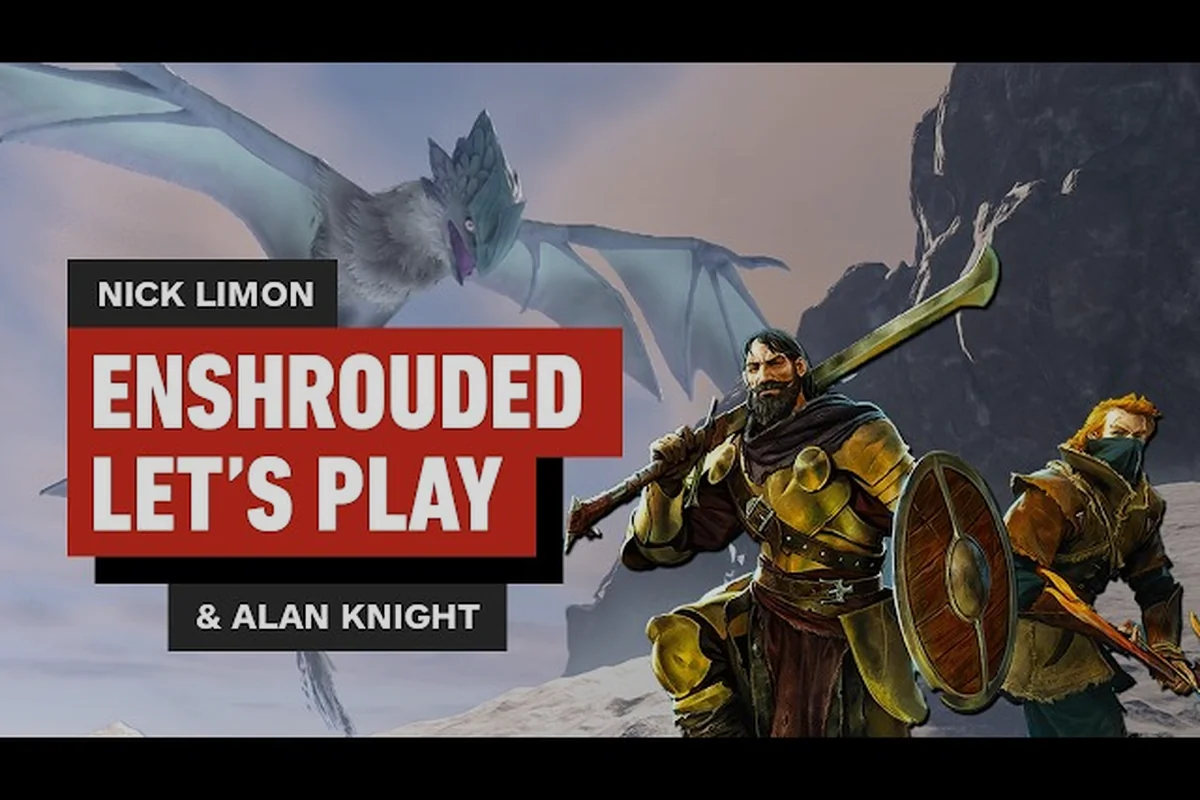
Enshrouded Adventure Sharing Guide: Build and Share Worlds
Explore the Enshrouded adventure sharing guide to publish custom worlds, browse community adventures, and build parkour or escape room levels others can play.
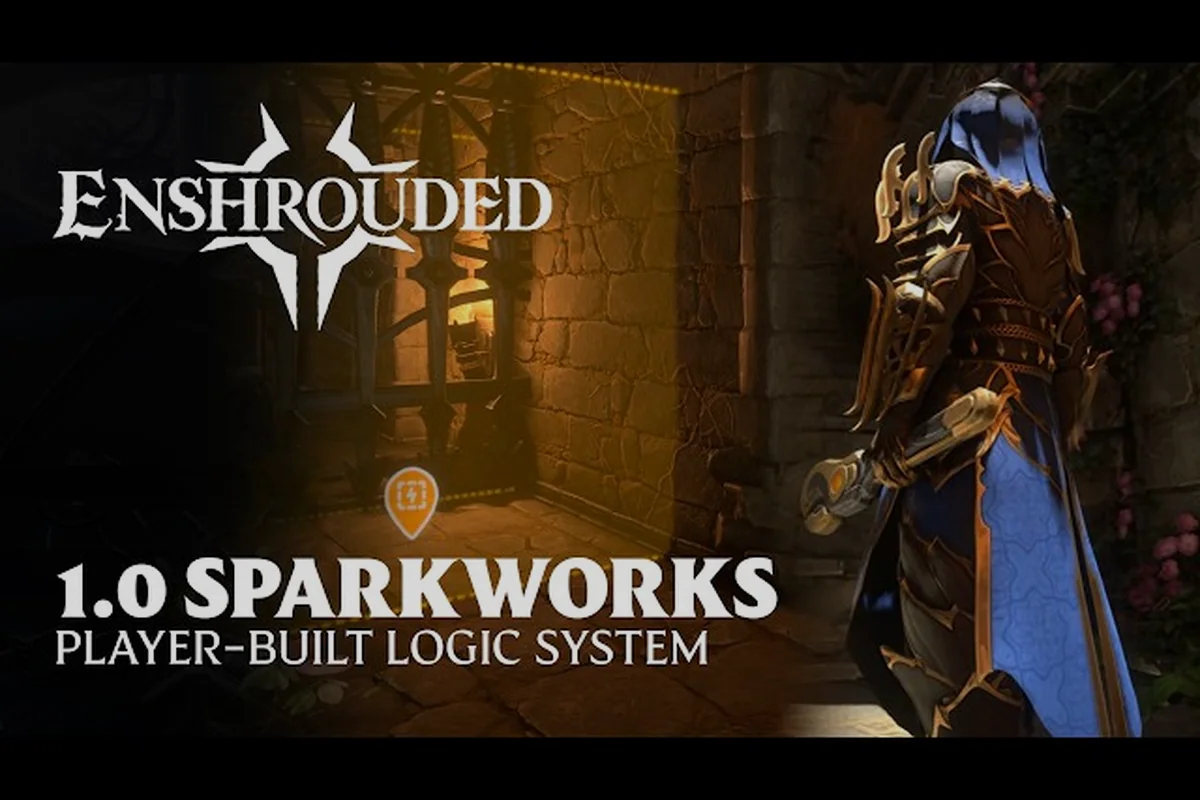
Enshrouded Battle Arena Building: Wire Traps With Sparkworks
Master Enshrouded battle arena building with the 1.0 Sparkworks logic system, wiring traps, light switches and spawners to pit friends against 14 new enemy types.
Enshrouded How to Revive Teammates: Death and Save Fixes
Find out how to revive teammates in Enshrouded, how death and respawning work in co-op, and how to migrate or back up your world after the 1.0 save change.
All Articles
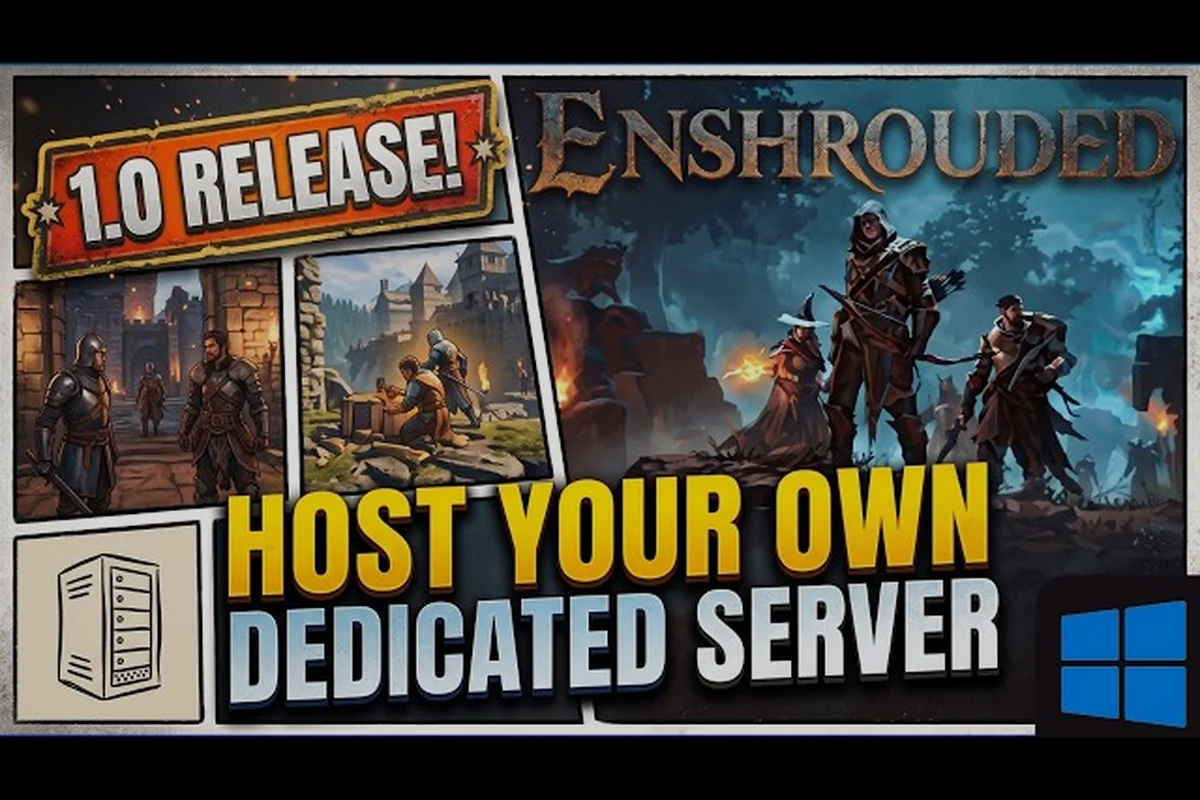
Enshrouded Multiplayer Guide: Host a 16-Player Server
Learn how to play Enshrouded with friends using this multiplayer guide, covering dedicated server setup, hosting, join codes and 16-player co-op limits.

Enshrouded Multiplayer Tips for Beginners: Solo vs Co-op
Start co-op the right way with these Enshrouded multiplayer tips for beginners, from offline and local play options to balancing a 16-player group against solo runs.
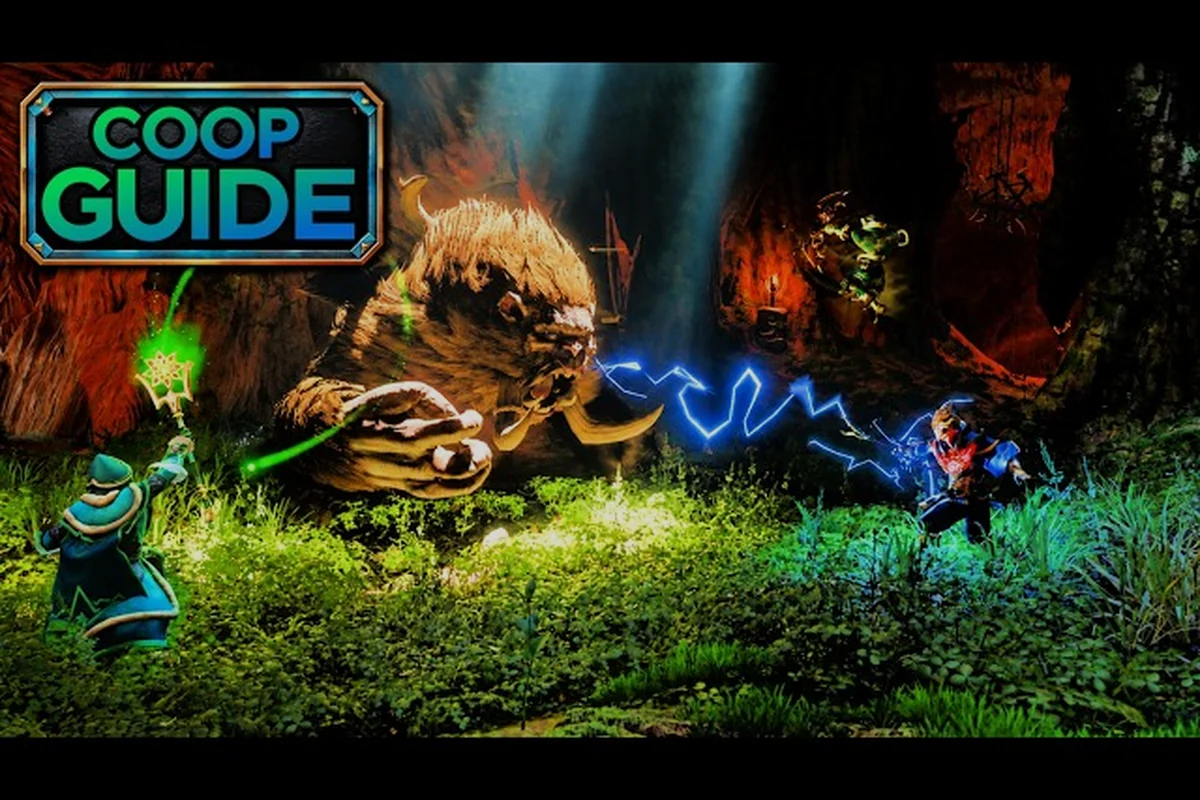
Enshrouded Online Co-op Explained: Invites, Loot and Scaling
Enshrouded online co-op explained in plain terms: how to invite players, whether loot and progression stay shared, and how difficulty scales with party size.