
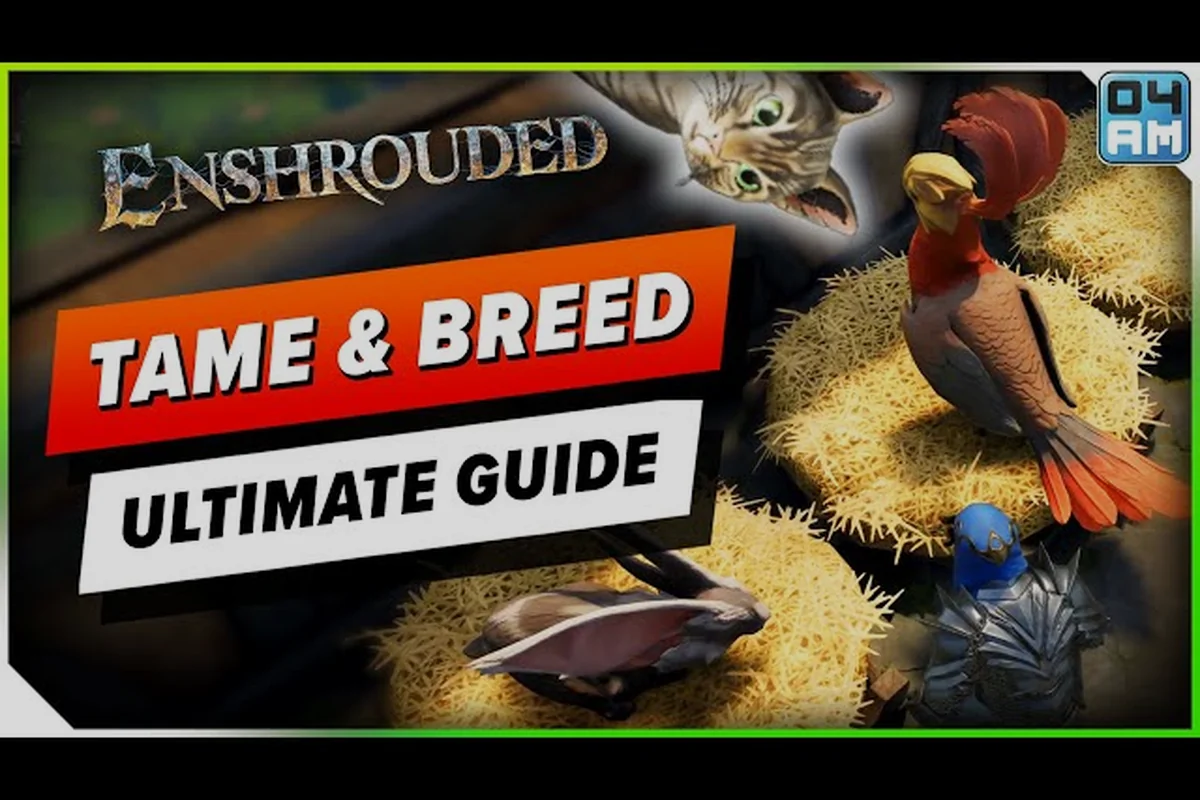
Animal husbandry in Enshrouded turns a lonely Flameborn camp into a living, breathing settlement, and this Enshrouded animal husbandry guide walks you through taming animals and rescuing the survivors who make it all worthwhile. You will learn where to find tamable creatures, how to bring rescued NPCs home, and why both systems feed directly into your crafting and quest progression.
Why Animal Husbandry and Survivor Rescue Matter
Enshrouded is a survival action RPG where you awaken as a Flameborn, the last hope of Embervale, and rebuild a fallen kingdom from scratch. According to the the official Enshrouded website, every mountain, desert, and body of water hides a secret, and the survivors you pull from the Shroud are among the most valuable discoveries. Animal husbandry and NPC rescue are not side distractions; they are the backbone of a functional base.
The core loop works like this: you explore the Shroud, find survivors trapped in ancient vaults, and bring them back to your base as specialized craftspeople. Each rescued NPC unlocks new recipes, services, or quest lines. Animals work alongside them, providing companionship, atmosphere, and in some cases practical resources for your settlement.
-
Survivors unlock crafting stations, quest chains, and base upgrades you cannot get any other way.
-
Animals populate your base, add life to your build, and expand the husbandry system introduced through later updates.
-
Both systems reward exploration, since the best recruits are hidden in dangerous Shroud zones.
The 1.0 changelog on the the changelog thread on Steam for Enshrouded confirms that all main crafting survivors and major quest givers are now fully voiced in English, German, and Mandarin Chinese. It also notes that survivor and animal pathfinding around obstacles, beds, chairs, and spiral staircases was improved, which matters a lot once your base fills up with residents.
Understanding this system early saves you hours later. A base with the right survivors produces better gear, faster crafting, and smoother quest progression, while a base with animals feels like a home rather than a storage shed. Concretely, the Blacksmith unlocks the forge for metal weapons and armor, the Alchemist opens potion and spell crafting, and the Hunter supplies ranged gear — so a single missing NPC can stall your entire gear tier. Because survivor pathfinding now handles beds, chairs, and spiral staircases, you can pack residents densely without them getting stuck, letting you stack crafting stations near your Flame Altar for shorter material runs.
How to Rescue Survivors in Enshrouded
Rescuing survivors is the first pillar of building a thriving settlement, and the Enshrouded npc rescue guide basics are straightforward once you know what to look for. Survivors are trapped inside Shroud-covered vaults, crypts, and ruins scattered across Embervale. You cannot simply walk up and recruit them; each one requires you to clear the area, defeat the guardians, and interact with a specific object to free them.
The general flow for any rescue looks like this, and it applies whether you are freeing the Blacksmith from his Shroud-sealed vault or pulling the Farmer out of a crypt: you locate the marked vault, clear the surrounding Shroud so your survival timer does not expire mid-fight, defeat the guardian enemies guarding the chamber, then interact with the glowing altar or cage to release the NPC. Skipping the guardian step is the most common mistake — the altar will not respond until the room is cleared, so treat each rescue as a short dungeon run rather than a simple pickup.
-
Locate the vault using map markers, quest hints, or exploration of Shroud zones.
-
Clear the Shroud around the entrance, since staying inside too long drains your survival timer.
-
Defeat the guardian enemies protecting the survivor's chamber.
-
Interact with the glowing altar or cage to release the NPC.
-
Return to your base and place the survivor at a designated spot to activate their services.
Each survivor specializes in a different craft. The blacksmith, the alchemist, and other craftspeople each bring unique recipes and stations. A dedicated Enshrouded survivors guide breaks down every individual recruit, their location, and the exact services they unlock, which is worth reading once you start hunting specific roles.
| Survivor Role | Primary Service | Why You Want Them |
|---|---|---|
| Blacksmith | Weapon and armor crafting | Core gear upgrades for combat |
| Alchemist | Potions and reagents | Survival and buff items |
| Hunter | Ranged gear and food | Ranged builds and cooking |
| Carpenter | Building and furniture | Base expansion and decoration |
| Farmer | Crops and seeds | Sustainable food supply |
The order you rescue survivors in matters less than making sure you get them all eventually. Community reports suggest that prioritizing the blacksmith and alchemist early gives the smoothest power curve, because better weapons and potions directly increase your ability to survive deeper Shroud runs where the remaining survivors are hidden.
Placement also affects efficiency. The 1.0 update lets you configure the roaming distance of survivors before placing them, with a minimum reduced to 2 metres, so you can keep craftspeople close to their stations instead of wandering across your base. Tight placement means faster interactions and less time chasing NPCs around.
How to Tame Animals and Get a Pet
Taming animals is the second pillar, and the Enshrouded how to tame animals process is more about patience and preparation than combat. Animals in Enshrouded are not hostile threats to be defeated; they are creatures you attract, feed, and befriend so they take up residence in your base. The husbandry system rewards players who build comfortable, well-stocked settlements.
The core steps for taming any animal follow a consistent pattern: each creature type has an associated bait item that must be placed in a feeding trough within a completed Animal Shelter before the animal will approach and register as a resident. Cats favor raw meat and milk, dogs respond to bones and raw meat, while livestock like goats and yaks require fodder such as straw or plant fiber. Once the trough is stocked and the shelter's comfort rating is satisfied, the animal's trust meter fills gradually — roughly one in-game day per stage — so a single taming attempt can span multiple sessions. Skipping the trough or building an incomplete shelter resets this progress entirely, which is why players who rush often see animals wander off before the trust threshold is reached.
-
Build the right housing such as pens, shelters, or designated animal areas within your base.
-
Provide food and water so animals have a reason to stay and thrive.
-
Approach calmly and avoid attacking, since aggression scares creatures away.
-
Wait for trust to build over time as the animal settles into your settlement.
Getting a pet specifically is tied to the animal NPC system, where cats and dogs can become permanent residents of your base. A dedicated Enshrouded animal NPCs guide covers the cat and dog variants, how to attract them, and the villager job system that lets your animals and NPCs contribute to base life. If your goal is simply the Enshrouded how to get a pet experience, focus on building a welcoming base first and the animals will follow.
| Animal Type | Attraction Method | Base Benefit |
|---|---|---|
| Cats | Comfortable indoor spaces | Companionship and atmosphere |
| Dogs | Open yards and shelter | Companionship and base life |
| Livestock | Pens and fodder | Husbandry resource loop |
The pathfinding improvements in 1.0 are a quiet quality-of-life win here. Animals and survivors now navigate around beds, chairs, and spiral staircases more reliably, so a multi-story base no longer traps your pets in corners. If you build vertically, this fix alone makes husbandry far less frustrating.
Patience is the real currency. Players who rush taming by chasing animals or building cramped pens often find creatures refuse to settle. Give them space, food, and a calm environment, and the husbandry system rewards you with a lively, populated base.
Building a Base That Supports Both Systems
A base designed for survivors and animals needs more than four walls. The layout you choose determines how smoothly husbandry and NPC services run, and a few planning decisions early save constant rebuilding later. Think of your base as three functional zones: crafting, living, and animal space.
The crafting zone holds your survivor stations, ideally clustered so you can move between the blacksmith, alchemist, and carpenter without long walks. The living zone contains beds, chairs, and decoration that raise comfort and give animals places to rest. The animal zone provides pens, open yards, and fodder storage so creatures have dedicated territory.
| Zone | Key Structures | Primary Purpose |
|---|---|---|
| Crafting | Forge, alchemy station, workbench | Gear and item production |
| Living | Beds, chairs, decoration | Comfort and NPC happiness |
| Animal | Pens, yards, fodder | Husbandry and pet housing |
Terraforming gives you enormous freedom here, since Enshrouded uses voxel-based building and free terraforming. You can carve flat platforms into hillsides, raise walls to fence animal yards, or dig sheltered courtyards that keep creatures safe from Shroud creep. A base built with husbandry in mind rarely needs major renovation, while a haphazard build often forces you to relocate pens and stations repeatedly.
Lighting and safety also matter. Shroud fog limits how long you can stay in affected areas before dying, so keeping your base outside Shroud zones protects both your survivors and your animals. If you are still expanding your territory, a guide on how to get Shroud Nexus explains the resource loop that keeps your exploration and base growth funded.
Finally, leave room to grow. The Flame Altar's build radius caps how far you can expand, so a base that fills every voxel early forces you to relocate the altar — and everything anchored to it — once you rescue additional survivors or tame more animals. Reserve roughly a quarter of your build area as empty terrain for future pens and stations: each new animal species you tame needs its own fodder trough and resting spot, and rescued NPCs like the blacksmith or alchemist each demand a dedicated station plus a bed. Spacing pens a few blocks apart also stops larger creatures from clipping into walls or blocking NPC pathing between the crafting and living zones.
Progression Tips for Husbandry and Rescue
Once your base is running, the focus shifts to efficiency and long-term progression. Husbandry and survivor rescue both scale with how well you organize your settlement, and a few habits separate a smooth playthrough from a messy one. These tips come from common player patterns rather than any single official source.
-
Rescue survivors in waves rather than one at a time, so you can batch base expansions.
-
Match animals to zones by keeping cats indoors and dogs in yards for cleaner pathfinding.
-
Upgrade crafting stations as soon as new survivors arrive, since fresh recipes often outperform old gear.
-
Stock food and fodder continuously so animals never wander off looking for supplies.
-
Revisit old vaults because some survivors and animal spawns only appear after certain quest milestones.
Skill progression ties into all of this. Better combat skills let you survive the deeper Shroud zones where the toughest survivors are hidden, and a solid Enshrouded leveling guide helps you plan skill points so exploration stays safe. Husbandry itself does not require combat skill, but reaching new animals and survivors often does.
| Priority | Action | Payoff |
|---|---|---|
| Early | Rescue blacksmith and alchemist | Strong gear and potions |
| Mid | Build animal pens and yards | Stable husbandry loop |
| Late | Fill all survivor roles | Full crafting and quest access |
Co-op players benefit enormously here, since up to 16 players can share a world. Splitting rescue runs across a group means faster vault clears and quicker base expansion, while shared animal pens keep everyone supplied. Solo players should pace themselves and prioritize the survivors that unlock the most useful stations first.
The overarching principle is simple: treat your base as a living system where survivors, animals, crafting stations, and quests all feed each other, so a well-organized settlement compounds your progress across dozens of hours. Concretely, rescued NPCs unlock the Blacksmith and Alchemist stations that turn raw ore and herbs into gear and potions, those potions let you push into deeper Shroud zones, and deeper zones yield the higher-tier survivors and animals that upgrade your pens in the first place. Assign each survivor to a dedicated station rather than letting them idle, keep fodder stocked so tamed animals never wander off mid-task, and batch base expansions after each wave of rescues. Played this way, a single afternoon of husbandry and rescue work can fund several hours of exploration.
Frequently Asked Questions
How do I rescue survivors in Enshrouded?
You rescue survivors by locating their vaults in Shroud zones, clearing the guardian enemies, and interacting with the altar or cage holding them. Once freed, return to your base and place the survivor at a designated spot to activate their crafting or quest services.
How do I tame animals and get a pet?
Build suitable housing like pens or shelters, provide food and water, and approach animals calmly without attacking. Over time they settle into your base as residents. Cats and dogs become permanent pets through the animal NPC system once your settlement is welcoming enough.
Do rescued survivors unlock new recipes?
Yes. Each survivor specializes in a craft such as blacksmithing, alchemy, hunting, carpentry, or farming, and placing them at your base unlocks their stations and recipes. The 1.0 update also added full voice acting for all main crafting survivors and major quest givers.
Can I place survivors anywhere in my base?
You can configure each survivor's roaming distance before placing them, with a minimum of 2 metres as of the 1.0 update. Placing craftspeople close to their stations keeps interactions fast and prevents NPCs from wandering across large bases.
Does animal husbandry require combat skill?
Husbandry itself is peaceful, but reaching the animals and survivors you want often means surviving deeper Shroud zones. Investing in combat skills and gear makes those exploration runs safer, which in turn expands the creatures and recruits available to your settlement.
Animal husbandry and survivor rescue transform an empty Embervale camp into a thriving settlement, and the two systems reinforce each other at every stage. Rescue the craftspeople who unlock your best gear, build a base that welcomes animals, and let your settlement grow into the home the Flameborn deserves.