
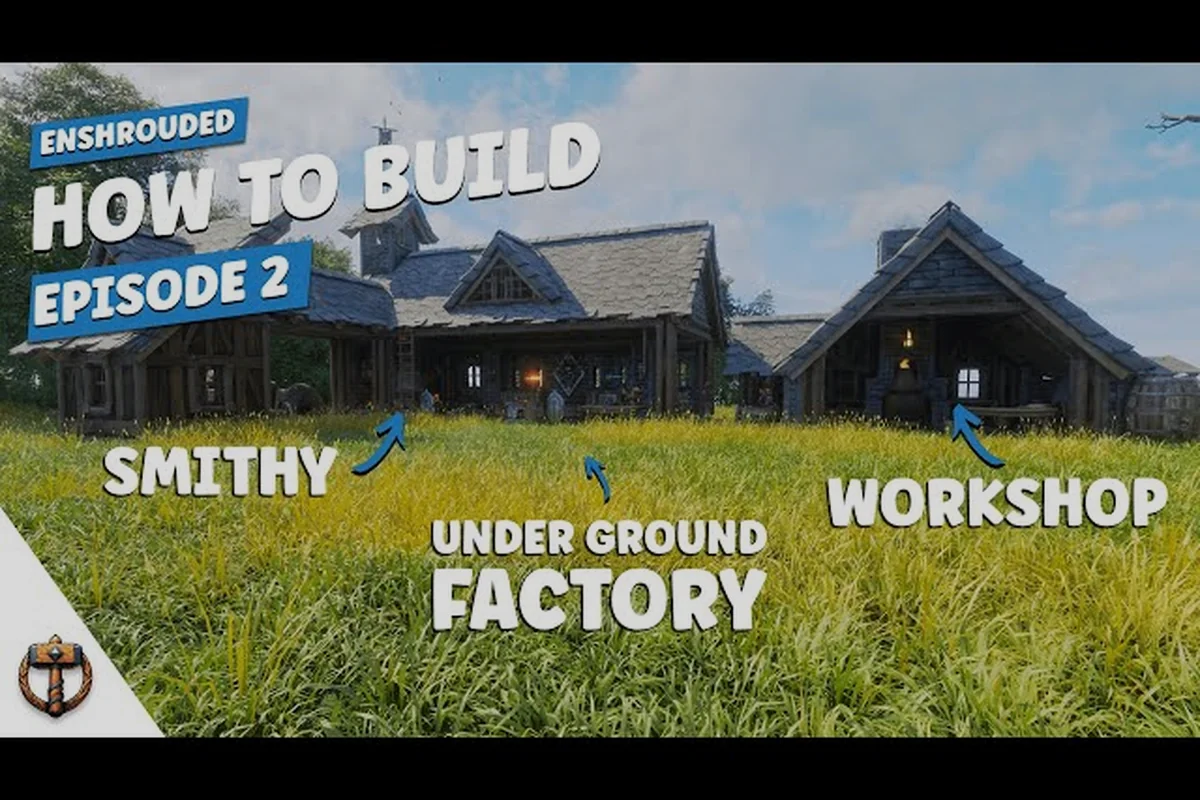
A good Enshrouded farm base layout decides whether your crops, crafting stations and co-op beds all fit inside one Flame Altar radius without wasting a single voxel. Get the zoning right early and every later upgrade becomes cheaper and faster.
Why Zoning Beats Decoration in a Farm Base Layout
Most players build a pretty house first and then discover their Kiln, Loom and Alchemy Station have nowhere to go. The fix is to treat your Enshrouded farm base layout as three functional rings: a farm ring, a crafting ring and a living ring. Each ring has its own footprint, and the Flame Altar radius is the hard boundary that contains all three.
The 1.0 changelog on the Steam's official announcement log confirmed that unlocking Flame level 11 raises the maximum number of Flame Altars in the world to 16, and that most areas previously flagged as no-build zones are now fully open. That single change is what makes a dedicated farm base plus satellite outposts practical instead of cramped. Here is how the three rings should be weighted before you place a single block:
| Ring | Typical footprint | Priority | Notes |
|---|---|---|---|
| Farm ring | 12x12 to 16x16 | High | Flat ground, near water |
| Crafting ring | 10x10 interior | Highest | Kiln, Loom, Alchemy, Workbench |
| Living ring | 8x10 interior | Medium | Beds, storage, comfort buff |
| Storage annex | 6x8 | Medium | Magic Chests once unlocked |
| Outpost pad | 6x6 minimum | Low | Separate altar, no beds |
The farm ring goes on the flattest terrain you can find, because terraforming a slope for crops costs far more time than moving your base two hundred meters. The crafting ring wants to sit at the center of the altar radius so that every station stays inside the buildable zone even after you expand outward. The living ring is the most flexible — it can go upstairs, underground or into a separate wing.
A common mistake is putting the Kiln at the edge of the radius. When you later upgrade the altar and the radius grows, that Kiln is fine, but if you instead move the altar, the Kiln falls outside and stops working. Keep heat-generating stations near the middle and push decorative builds to the perimeter. If you are still deciding where to settle in the first place, the base location comparison breaks down terrain, resources and travel distance for each region, which pairs directly with the zoning plan above.
Building the Crafting Base Layout That Scales
An Enshrouded crafting base layout lives or dies on station adjacency. Stations that feed each other should share a wall; stations that produce heat or smoke should vent outside. The goal is a loop where you walk in with raw materials and walk out with finished gear without crossing the same floor twice.
Station Placement by Function
Group your production chain into three clusters. The Kiln and Charcoal production belong together because the Kiln eats fuel constantly and you want the charcoal pile within arm's reach. The Loom, Spinning Wheel and Tanning Station form the textile cluster, since linen and leather recipes bounce between all three. The Alchemy Station and Laboratory form the consumables cluster, and they should sit near your storage so you can restock reagents quickly.
| Cluster | Stations | Shared inputs | Placement tip |
|---|---|---|---|
| Heat | Kiln, Smelter | Charcoal, ore | Vent outside, stone floor |
| Textile | Loom, Spinning Wheel, Tanning Station | Linen, leather, resin | Adjacent walls, one doorway |
| Consumables | Alchemy Station, Laboratory | Herbs, shroud liquids | Near storage, away from heat |
| Gear | Workbench, Blacksmith | Ingots, hardwood | Central, high traffic |
| Food | Cooking Station | Crops, fish, meat | Next to farm ring exit |
Storage and the Magic Chest Shortcut
Storage is the silent bottleneck. Before Magic Chests, every station pulls from its own inventory, which means you either carry materials manually or build a chest next to each station. Once you unlock Magic Chests, the entire crafting base layout changes because a single linked chest can feed multiple stations at range.
The Magic Chest unlock path explains the upgrade chain and what each tier actually links to, and it is worth reading before you commit to a chest wall you will later tear down. Community reports suggest players who unlock Magic Chests early save hours of hauling, so prioritize that upgrade the moment it appears in your crafting menu.
Vertical Crafting Towers
When your altar radius is tight, build up instead of out. A two-story crafting tower with the Kiln on the ground floor and the Alchemy Station above works because heat rises and you can vent the roof. Just remember that the Flame Altar radius is a sphere-ish volume, so a tall tower can poke out of the top of the buildable zone if you go too high. Test with a single block before committing to a full floor.
Designing the Best Base for Co-op Play
The best base for co-op in Enshrouded is not the biggest one — it is the one where four players can craft, sleep and sort loot without standing on each other. Co-op supports up to 16 players according to the official Enshrouded store page, but a practical shared base usually serves three to six people comfortably.
Beds, Comfort and the Rested Buff
Every co-op member needs a bed to set their respawn point and to earn the rested buff. Beds do not need to be in separate rooms, but they do need to be inside the altar radius and sheltered. A dormitory wing with four to six beds, a fireplace and a few decorative props delivers the comfort bonus without eating your whole footprint.
| Co-op need | Minimum build | Recommended | Why it matters |
|---|---|---|---|
| Respawn beds | 1 per player | 1 per player + 1 spare | Death recovery speed |
| Shared storage | 2 chests | 4-6 chests by category | Loot sorting |
| Cooking access | 1 station | 2 stations | Parallel food prep |
| Crafting access | 1 of each | Duplicate Workbench | Avoid queueing |
| Private space | Optional | Small rooms | Player preference |
Loot Sorting and Shared Progression
Because progression is shared in co-op, everyone unlocks recipes at the same time, which means the crafting ring gets crowded fast. Build duplicate Workbenches and Cooking Stations so two players can craft simultaneously. Dedicate one chest per material category — ore, wood, textile, reagents, food — and label them with signs or distinct building blocks so teammates can find things without asking.
Outpost Building Guide for Group Play
A co-op group should not put everything in one base. Split into a main farm base and one or two outposts near distant biomes. The Flame Altar upgrade guide covers how altar levels gate your total altar count, and that number is what determines how many outposts you can realistically maintain.
How to Place a Flame Altar Correctly
Knowing how to place a Flame Altar is the single most important skill in base building, because a misplaced altar wastes an entire build slot. The altar defines the buildable radius, the respawn point and the fast-travel anchor, so its position matters more than any wall you raise afterward.
Step-by-Step Altar Placement
-
Step 1: Scout the terrain first. Walk the full area you want to build on and check for slopes, water and shroud edges before you commit.
-
Step 2: Craft the altar. You need stone and a Workbench; the recipe appears early in the crafting list.
-
Step 3: Place it at the center of your intended footprint. Not at the entrance — at the middle, so expansion is symmetrical.
-
Step 4: Check the radius visually. The buildable zone shows as a highlighted boundary; walk the edge to confirm your farm and crafting rings both fit.
-
Step 5: Confirm placement and name the altar. Naming it helps when you have multiple outposts on the map.
-
Step 6: Upgrade the flame before expanding. Strengthening the flame raises the radius and unlocks the next crafting tier automatically.
| Altar decision | Good choice | Bad choice | Consequence |
|---|---|---|---|
| Position | Center of planned base | Edge of a cliff | Wasted radius |
| Timing | Before building | After building | Rebuild everything |
| Terrain | Flat, near water | Steep slope | Terraforming time sink |
| Naming | Descriptive | Default | Confusion with outposts |
Common Altar Mistakes
The most frequent error is placing the altar before scouting, then discovering the ground is too steep for crops. The second is forgetting that upgrading the flame also unlocks armor recipes for the next tier — players who skip a resource or quest sometimes assume they missed a recipe when the upgrade simply had not happened yet. The third is placing altars too close together, which wastes build slots you will want later for distant outposts.
How to Move Your Base Without Losing Progress
Learning how to move your base is mostly about planning, because Enshrouded does not offer a one-click relocation. You either rebuild at the new site or dismantle and carry materials over.
The Two Relocation Methods
| Method | Effort | Best for | Risk |
|---|---|---|---|
| Full rebuild | High | Major biome change | Losing rare blocks |
| Dismantle and haul | Medium | Short moves | Inventory overflow |
| Outpost-first | Low | Testing a new region | Two bases to maintain |
The outpost-first method is the smartest option for most players. Place a cheap altar at the new location, build a minimal shelter and storage there, and only move your main crafting ring once the new site proves better. This way you never abandon a working base for an unproven one.
What Carries Over
Your character, skills, gear and unlocked recipes all travel with you — only the physical structures stay behind. That means the real cost of moving is materials and time, not progression. Load your Magic Chests with the materials you want to keep, dismantle the rest for partial refunds, and rebuild the crafting ring first so you can immediately craft replacement blocks.
When Moving Is Worth It
Move when your current biome no longer supplies the resources your crafting tier demands, when the terrain blocks farm expansion, or when your co-op group outgrows the altar radius. Do not move just because a friend built somewhere prettier — the travel time between a farm base and its resource zones is the real cost, and a well-zoned base in an average location usually beats a badly zoned base in a perfect one.
Outpost Strategy for a Multi-Base Empire
Once you reach Flame level 11 and unlock the full altar count, outposts become the backbone of efficient play. An outpost is a small altar with minimal structures: a shelter, a chest, a bed and one or two stations. Its job is to shorten travel, not to replace your main base.
| Outpost type | Structures | Purpose | Altar level needed |
|---|---|---|---|
| Mining camp | Shelter, chest, bed | Ore farming | Low |
| Biome anchor | Shelter, Workbench | Regional crafting | Medium |
| Boss staging | Bed, chest, cooking | Retry attempts | Medium |
| Farm satellite | Crops, water access | Rare crop growth | Low |
Keep outposts deliberately small. Every block you place in an outpost is a block you are not placing in your main farm base, and the altar count is finite. The strongest setups use two or three lean outposts rather than five sprawling ones, because each outpost still needs a bed and storage to be useful.
Frequently Asked Questions
How big should a farm base be in Enshrouded?
A comfortable farm base fits inside a mid-tier Flame Altar radius with a 12x12 crop plot, a 10x10 crafting interior and an 8x10 living wing. Expanding the flame radius is usually cheaper than rebuilding, so upgrade the altar before you add a second floor or a larger farm.
Can I have more than one base in Enshrouded?
Yes. The 1.0 changelog raised the maximum number of Flame Altars in the world to 16 once you unlock Flame level 11, so you can maintain a main farm base plus several small outposts. Each altar needs its own placement and its own bed if you want a respawn point there.
What is the best base for co-op groups?
The best co-op base duplicates the high-traffic stations — Workbench and Cooking Station — and adds one bed per player plus a spare. Shared progression means everyone unlocks recipes together, so parallel crafting space matters more than individual rooms or decorative builds.
Does moving my base lose my unlocked recipes?
No. Character progression, skills, gear and recipes all stay with you when you relocate. Only the physical structures remain behind, so the real cost of moving is the materials and time spent rebuilding your crafting ring at the new site.
Where should I place my first Flame Altar?
Place it at the center of the flattest ground you can find, ideally near water for farming and away from shroud edges. Scout the terrain on foot first, because a misplaced altar wastes a build slot and forces you to rebuild everything around it later.
A strong Enshrouded farm base layout comes down to three decisions made in the right order: zone the rings before you build, place the Flame Altar at the center of flat ground, and keep outposts lean so your altar count stretches across the whole map. Nail those and every crafting tier upgrade lands on a base that already has room for it.