
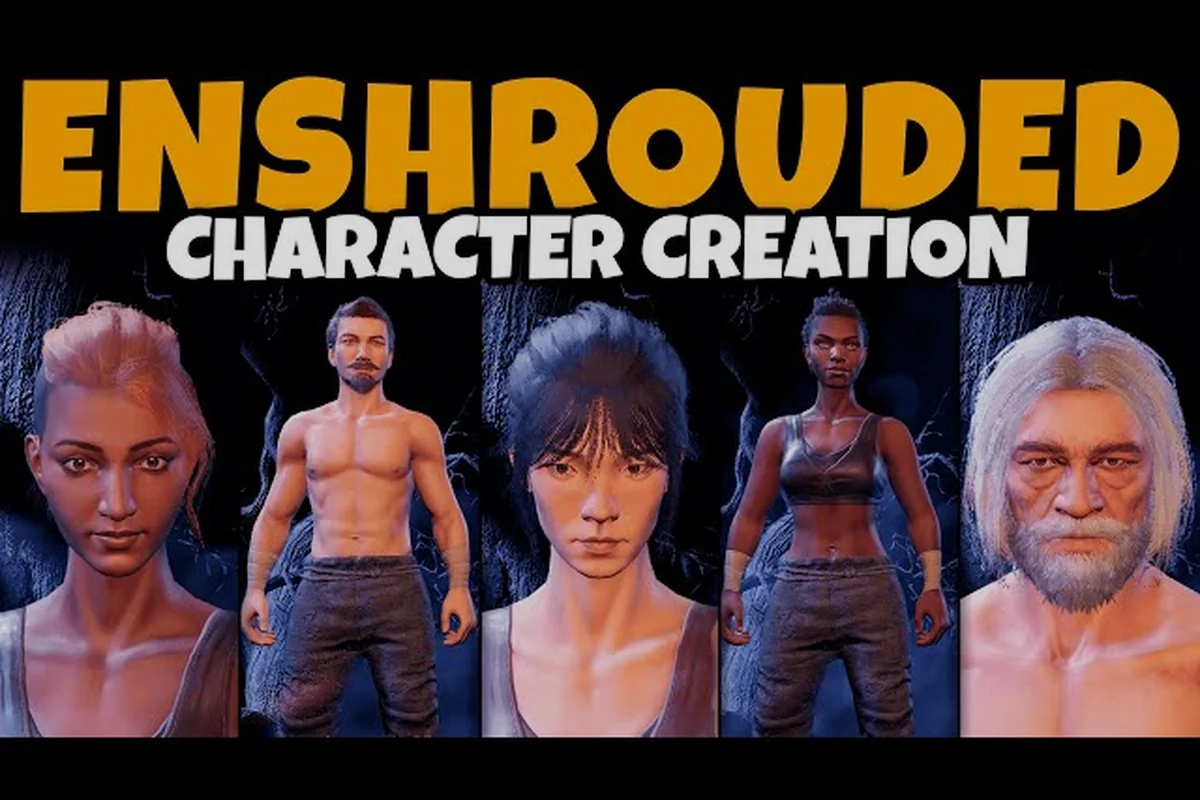
Enshrouded character customization finally got the overhaul survivors had been asking for, and the 1.0 release pairs it with a finished story. This guide walks through the proportions setting, the Barber, and the Ancients lore that gives every choice meaning.
According to the official Steam news hub for Enshrouded, character customization options and related updates are documented directly by the developers at the official Enshrouded Steam news archive.
What Changed in Enshrouded Character Customization
The biggest shift in the 1.0 update is that your survivor is no longer locked into the body you picked on day one. According to the official Steam news post, players can now choose between classic proportions and a new, more realistic set — either at character creation or later at the Barber, a vendor named Elio. That single change removes the old fear of "ruining" a character before you understood how armor silhouettes read in third person.
Customization in Embervale was never purely cosmetic, though. The game is a light survival action RPG where you terraform the land, build sanctuaries, and push back the Shroud, so your avatar is the anchor you stare at for dozens of hours. A body that clips through a bulky chest piece or floats above a saddle breaks immersion fast, which is exactly why the proportions toggle matters more than it sounds.
Here is what the current system actually offers at a glance: two body models (the original classic proportions and the new realistic proportions), both selectable at creation or later through Elio the Barber; head, hair, and facial feature editing at the same stations; full cosmetic overrides via vanity outfits crafted from gold coins and sold by Mei-Yin Chen; and celebration items like fireworks and confetti bombs, which moved onto Mei-Yin Chen's vendor list rather than occupying a stat slot. Note what is absent from that list — no height slider, no muscle or weight tuning, no per-limb scaling — so the proportions toggle is the only lever governing your silhouette, which is precisely why it carries so much weight when you are matching a body to Embervale's heavier armor sets.
| Customization Element | Where You Access It | What It Changes |
|---|---|---|
| Classic proportions | Character creation or Elio the Barber | Original 2024 body model |
| Realistic proportions | Character creation or Elio the Barber | New 1.0 body model |
| Face and hair | Character creation, later at the Barber | Head, hair, facial features |
| Vanity outfits | Mei-Yin Chen, crafted with gold coins | Full cosmetic overrides |
| Fireworks and confetti bombs | Moved to Mei-Yin Chen's vendor list | Celebration items, not stats |
The practical takeaway is simple: nothing you pick at creation is permanent anymore, so you can experiment freely and adjust once you see how your survivor moves through the world. Because Elio the Barber lets you swap between classic proportions and realistic proportions at any point, there is no reason to reroll a character over a silhouette mismatch — the fix costs a short walk to the vendor, not a fresh save. Practically, that means you can start with the classic body, run a few Shroud-clearing routes in your heaviest armor, and only commit to realistic proportions after you have watched how shoulder plates and cloaks sit during combat and mounted travel. The one thing the toggle cannot rescue is a face you dislike, so treat head and hair edits at the Barber as the second pass on your build rather than a first-creation decision you have to get right.
Why the Proportions Setting Matters More Than It Looks
Body proportions affect far more than a screenshot. The realistic model changes limb length and torso mass, which subtly shifts how your character's hitbox reads during dodges and how cloaks drape over the shoulders. Community reports suggest the visual difference is most obvious in heavy armor sets and while riding, where the classic model can look slightly stockier.
If you group up with a party that can stretch to sixteen players, consistent proportions across the whole crew also make group shots and shared bases feel more cohesive. It is a small detail, but it is the kind of detail that separates a character you tolerate from one you actually enjoy looking at for a full playthrough.
How to Change Your Appearance After Creation
Changing your look mid-run is straightforward once you know where to go, and it costs you nothing but travel time. The Barber handles everything from a full proportion swap to a fresh haircut, so you never need to reroll a character just to fix a bad decision.
Reaching Elio is only half the battle — the Barber is a summoned survivor, so he will not appear at your base until you have recruited him through the Flame Altar's summoning system. Once Elio is stationed at your camp, walk up and interact with him to open the same appearance interface you used during character creation, where you can toggle between the classic and realistic body proportion models, preview how each silhouette reads under your current armor set, and freely adjust face shape, hair, and individual features at zero cost. Confirm your edits and they apply instantly, with no respawn, reload, or Shroud trip required, which makes Elio the cheapest way to fine-tune a build's look long after you have left the character creation screen.
-
Unlock and summon Elio the Barber at your base using the summoning system, since vendors only appear once you have recruited them.
-
Interact with Elio and open the appearance menu — this is the same interface you saw during character creation.
-
Toggle between classic and realistic proportions and preview how each model sits under your current armor.
-
Adjust face, hair, and features freely; the Barber does not charge for cosmetic edits.
-
Confirm and exit — your changes apply instantly with no respawn or reload required.
Because the Barber is a summoned survivor, your ability to customize is tied to base progression. If you have not yet brought Elio to your camp, the process of recruiting NPCs is worth understanding first, and our guide on how to summon survivors covers the summoning flow, storage, and the death penalty that can set you back if you rush into the Shroud unprepared.
Vanity Items and the Gold Coin Economy
Beyond the body itself, the 1.0 update introduced a vanity system tied to Mei-Yin Chen, who crafts cosmetic outfits in exchange for gold coins. These outfits override your appearance without touching your stats, which means you can run optimal gear and still look the way you want. Fireworks and confetti bombs were also moved to her vendor list, so she has become the de facto cosmetics and celebration hub.
Gold coins are the currency here, and they accumulate naturally as you explore, loot, and complete objectives. There is no premium currency gate on vanity, which keeps the system friendly to solo players who would rather earn their look than buy it.
| Appearance Task | Vendor | Cost | Reversible? |
|---|---|---|---|
| Swap proportions | Elio the Barber | Free | Yes |
| Change hair and face | Elio the Barber | Free | Yes |
| Craft vanity outfit | Mei-Yin Chen | Gold coins | Yes |
| Buy fireworks | Mei-Yin Chen | Gold coins | Consumable |
Enshrouded Lore and Story Explained
Customization feels richer once you understand who your survivor actually is, because Embervale is not a blank sandbox — it is a fallen kingdom with a history you are walking through. The official site frames the setting bluntly: Embervale is a lost kingdom, and you are its last hope. Every ruin, desert, and body of water hides a secret, and the story is delivered through environmental storytelling and lore entries rather than long cutscenes.
The 1.0 release completed that narrative arc. Rock Paper Shotgun noted that after almost three years in early access, the game shipped with a complete story, a bigger map, and far more content than they could list in a single article. For players who bounced off the early-access version because the plot felt unfinished, that is the headline change.
Your survivor is one of the Flameborn, revived and bound to the Flame, which is why death is a setback rather than an ending. The Flame is not just a respawn mechanic — it is the in-world reason your character exists at all, and the lore treats it as both a gift and a burden.
The Ancients and the Shroud Connection
The Ancients lore is the backbone of the mystery. Long before your survivor woke, a civilization of Ancients wielded the Flame and shaped Embervale, and their fall is directly tied to the Shroud that now blankets the map. The Shroud is a fog that limits how long you can stay inside before dying, and understanding it as a consequence of the Ancients' hubris reframes it from "annoying hazard" to "historical wound."
Community data on the wiki documents the mechanics around this — the Flame Altar, the Shroud, Hollow Halls, and the Bestiary — though the wiki is community-maintained and may not reflect every 1.0 change, so treat its numbers as estimates. The narrative thread, however, is consistent: the Ancients reached too far, the Shroud answered, and the Flame is the only thing holding the darkness back.
If you want to push deeper into the Shroud without dying constantly, the mechanics of surviving it are covered in our Shroud survival and Flame Altar guide, which explains flame levels and the timer that governs how long you can breathe inside the fog.
Enshrouded the Flame Lore Explained
The Flame is the single most important concept in Embervale, and it is worth separating its lore role from its gameplay role. In gameplay terms, the Flame is anchored at your Flame Altar, which defines your base territory and respawn point. In lore terms, the Flame is a remnant of the Ancients' power, a spark that refuses to die and that chooses the Flameborn to carry it forward.
That duality is why the game's progression feels thematically tight. Strengthening the Flame expands your territory and lets you push into harsher biomes, which mirrors the story beat of reclaiming a kingdom piece by piece. You are not just leveling up — you are literally rekindling what the Ancients lost.
| Lore Concept | In-World Meaning | Gameplay Effect |
|---|---|---|
| The Flame | Last spark of the Ancients | Respawn anchor, base territory |
| Flameborn | Survivors bound to the Flame | Your playable character |
| The Shroud | Fog born from the Ancients' fall | Time-limited hazard zone |
| Embervale | The lost kingdom | The open world you explore |
| Hollow Halls | Ancient ruins | Dungeon content and lore |
Reading the Story Through the World
Because Embervale tells its story environmentally, the best way to absorb the lore is to slow down. Lore entries, ruin layouts, and NPC dialogue all carry fragments, and the 1.0 update added new quests plus lore entries for the first Twitch campaign outfit, giving completionists more to chase. Reading these as you go turns a survival grind into a mystery you are actively solving.
The Flame's lore also explains why the world feels haunted rather than empty. Every abandoned outpost is a reminder that someone lived there before the Shroud came, and your base-building is, in a quiet way, an act of restoration rather than conquest.
Building a Survivor That Fits Your Playstyle
Once you understand both the customization tools and the lore, you can make choices that feel intentional rather than random. The realistic proportions model tends to suit players who favor agile, dodge-heavy builds, while the classic model reads well for tanky, heavy-armor survivors. Neither affects stats, so pick based on the silhouette you enjoy watching.
A few practical habits keep your survivor looking sharp across a long playthrough: preview every proportion change under your actual armor rather than the Barber's default cloth, since a classic build that reads heroic in a tunic can look squat once Emberveil-style pauldrons and heavy cloaks are layered on. Because body sliders are purely cosmetic and never touch stamina, health, or damage values, you can freely retune your silhouette after each major gear tier without any stat penalty. Keeping one saved vanity preset for co-op also lets a 16-player party stay visually coordinated while everyone wears their real stat gear underneath.
-
Preview under real armor before locking a proportion choice, since cloaks and pauldrons change the read dramatically.
-
Keep a vanity outfit ready for co-op sessions so your group looks coordinated without sacrificing stats.
-
Revisit the Barber after major gear upgrades, because a body that looked right in cloth may look off in plate.
-
Match your look to your role in a 16-player party so teammates can identify you at a glance during chaotic fights.
Base layout and appearance are more connected than they seem, since a well-organized camp makes the Barber and vanity vendors easy to reach. Our breakdown of an efficient farm and crafting base layout shows how to place vendors and storage so you are never running across the map just to tweak your look.
Common Mistakes New Survivors Make
The most frequent regret players report is committing hard to a build and look before understanding how the game plays at higher levels. Since the Barber makes both reversible, the smarter approach is to treat your first ten hours as a test run — experiment with proportions, try a vanity outfit, and only then settle into a signature look.
A second mistake is ignoring the lore entirely and treating Embervale as a pure sandbox. The story is what gives the Flame and the Shroud emotional weight, and skipping it makes the endgame feel like busywork instead of a payoff. Reading lore entries costs nothing and pays off in how the final act lands.
Frequently Asked Questions
Can I change my character's proportions after creating them?
Yes. Since the 1.0 update, you can switch between classic and realistic proportions at any time by visiting Elio the Barber, the vendor who handles all cosmetic edits. There is no cost and no need to reroll your character, so you can experiment freely until you find the body model that suits your armor and playstyle.
Where do I find the Barber in Enshrouded?
Elio the Barber is a summonable survivor, so you must recruit and summon him to your base before you can use his services. Once he is stationed at your camp, interacting with him opens the same appearance menu you saw during character creation, letting you adjust proportions, hair, and facial features on the spot.
Does the proportions setting affect gameplay or stats?
No. The classic and realistic proportion options are purely visual and do not change your stats, hitbox, or combat performance. The choice comes down to how your survivor reads under different armor sets and while riding, so pick whichever silhouette you prefer watching during long exploration sessions across Embervale.
What is the Flame in Enshrouded's story?
The Flame is the last remnant of the Ancients' power and the reason the Flameborn exist. In gameplay it anchors your respawn point and base territory through the Flame Altar, while in lore it represents a spark that survived the Ancients' fall and now holds the Shroud back from consuming what remains of Embervale.
Who are the Ancients and why do they matter?
The Ancients were the civilization that wielded the Flame and shaped Embervale before their downfall, which directly caused the Shroud to spread across the kingdom. Their ruins, Hollow Halls, and scattered lore entries form the backbone of the story, and understanding them turns the Shroud from a simple hazard into the central mystery you unravel.
Customization and lore in Embervale reinforce each other: the proportions setting and the Barber give you control over how your Flameborn looks, while the Ancients and the Flame explain why that survivor exists at all. Build a character you enjoy watching, read the lore as you explore, and the kingdom you are rebuilding will feel like yours.