
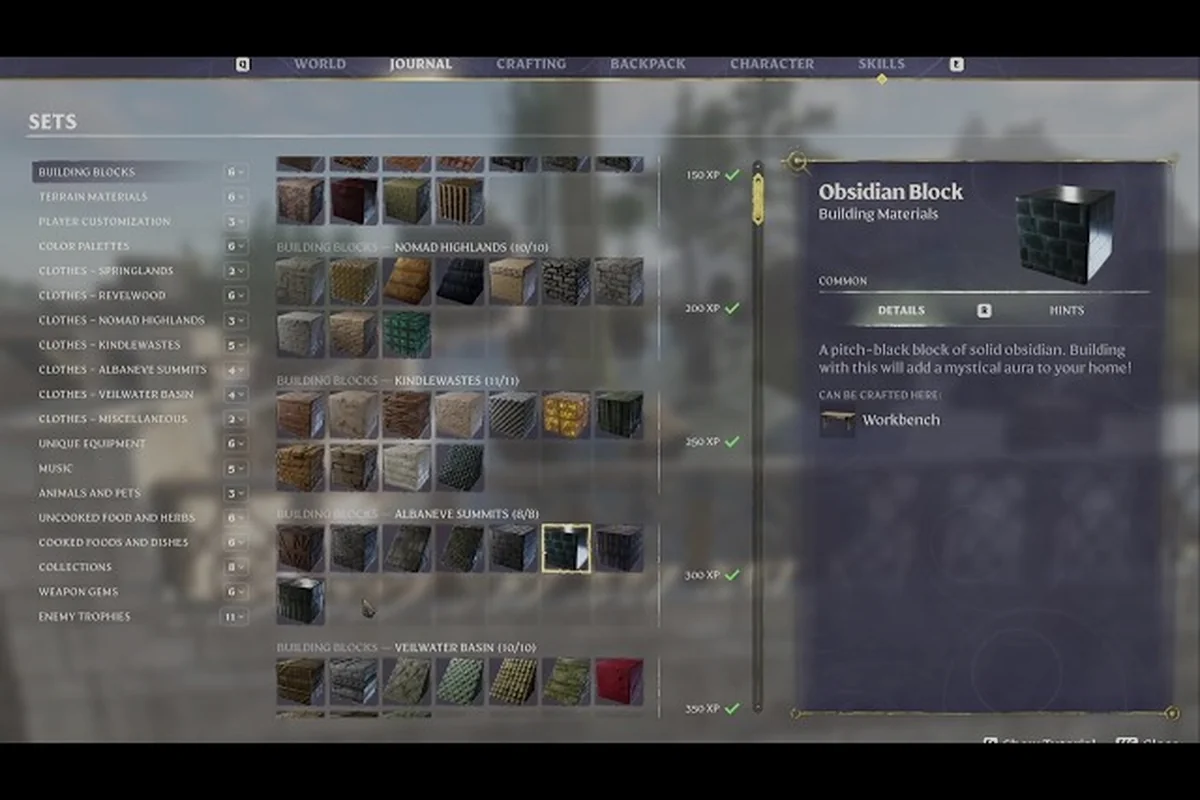
The Enshrouded crafting materials list is the backbone of every build in Embervale, and knowing which ores, resins and shroud cores feed your workbenches saves hours of aimless farming. This guide maps the materials you actually need, the recipes worth unlocking first, and how the same resources push your weapons, armor and eternal spells to tier 7.
Enshrouded Crafting Materials List: Core Resources You Farm First
Every recipe in the game traces back to a handful of raw materials, and the Enshrouded crafting materials list only becomes manageable once you understand which nodes feed which station. Early on you are pulling Flint, Wood Logs and String from the starting biome, but the moment you place a Blacksmith and an Alchemist, the demand curve bends sharply toward metals and magical reagents.
The community wiki documents the full station roster — Blacksmith, Alchemist, Hunter, Carpenter, Farmer and more — and each one gates its own slice of the material tree. According to community data, most players stall around level 15 because they keep farming the wrong tier of ore instead of pushing into the Shroud for Shroud Wood and Shroud Cores.
Here is the material-to-station mapping that keeps your production line moving: Flint and Wood Logs feed the Blacksmith and Carpenter for starter tools and building pieces, String from fiber plants routes to the Hunter for bows and cloth armor, and Copper Ore versus Iron Ore both land at the Blacksmith but unlock different gear tiers — Copper for Tier 2 weapons, Iron for Tier 3-4. The moment you push into the Shroud, Shroud Wood becomes a Carpenter input while Shroud Cores and Resin go straight to the Alchemist for spells, elixirs and adhesives, so mismatching a material to the wrong station is the fastest way to stall your upgrade path.
| Material | Primary Source | Feeds Station | Typical Use |
|---|---|---|---|
| Flint | Surface rocks, early caves | Blacksmith | Starter tools, arrows |
| Wood Logs | Chopping any tree | Carpenter | Building, handles |
| String | Fiber plants, spiders | Hunter | Bows, cloth armor |
| Copper Ore | Copper veins, low caves | Blacksmith | Tier 2 weapons |
| Iron Ore | Iron veins, mid Shroud | Blacksmith | Tier 3-4 gear |
| Shroud Wood | Shroud trees | Carpenter | Shroud-tier crafting |
| Shroud Core | Shroud enemies, chests | Alchemist | Spells, elixirs |
| Resin | Tree taps, drops | Alchemist | Adhesives, upgrades |
The key insight is that Copper and Iron are not interchangeable — the game tracks them as separate upgrade currencies, so stockpiling one does nothing for gear that demands the other. Players who build a dedicated storage room with labeled chests report far less backtracking, and the magic chests guide explains how to link your stockpiles to every workbench so you never carry ore by hand again.
Once your stations are stocked, the next bottleneck is recipes themselves. Many of the strongest items never appear in a menu until you physically find their blueprint, which is why the Enshrouded crafting materials list and the hidden recipe hunt are really two halves of the same task.
Enshrouded Best Recipes to Unlock Early
Deciding which recipes deserve your first rare materials is the single biggest efficiency decision in the early game. The Enshrouded best recipes to unlock are the ones that compound — a better pickaxe accelerates every ore run, and a better weapon accelerates every Shroud dive that feeds your Alchemist.
Community reports consistently rank the Grappling Hook and the Glider as the two unlocks that change traversal most, because vertical access opens resource nodes you simply cannot reach on foot. After those, prioritize the Improved Pickaxe and Improved Axe, since gathering speed multiplies across every future session.
| Recipe | Unlock Method | Material Cost | Why It Matters |
|---|---|---|---|
| Grappling Hook | Blacksmith quest chain | Iron, String, Resin | Vertical traversal |
| Glider | Carpenter blueprint | Wood, String, Resin | Long-distance travel |
| Improved Pickaxe | Blacksmith tier 2 | Iron, Copper | Faster ore farming |
| Improved Axe | Blacksmith tier 2 | Iron, Wood | Faster lumber |
| Healing Potion | Alchemist starter | Shroud Core, Herbs | Survival in Shroud |
| Eternal Fireball | Alchemist, hidden | Shroud Core, Ember | Infinite spell use |
The Eternal Fireball deserves special attention because it is the gateway to the entire eternal spell economy. Before the 1.0 update, spells were consumable and expensive; now every spell ships with an Eternal version, and 22 tier 7 spell variants exist according to the Enshrouded Steam news page. That change alone reshapes how you budget Shroud Cores.
If you want the full breakdown of which spells are worth the eternal investment, the spells list and eternal spells guide covers damage scaling and mana costs in detail. For now, treat Shroud Cores as your most precious material and never spend them on a recipe you will outgrow within two levels.
How to Unlock Hidden Recipes in Enshrouded
The hidden recipe system is where most players get stuck, because the game never tells you a blueprint exists until you are standing on top of it. Learning how to unlock hidden recipes in Enshrouded comes down to three reliable behaviors: looting every chest, completing survivor quests, and clearing Hollow Halls.
Chests are the most common source. Shroud chests and Hollow Hall chests drop blueprints for weapons, armor sets and even building pieces, and the drop pool scales with the region's difficulty. A chest in a low-level Shroud pocket will rarely give you tier 5 gear, so push into harder zones before expecting premium drops.
Survivor quests unlock station upgrades rather than raw recipes, which is why they matter more than most players expect. Rescuing the Blacksmith, Alchemist, Hunter and Carpenter each opens a quest chain tied to that NPC's station — the Blacksmith line raises your forge tier, the Alchemist line gates higher-tier potions and eternal spell reagents, and the Carpenter line unlocks advanced building materials. Finishing those chains is what actually raises your crafting ceiling, so a player with a full inventory of tier 3 ore still cannot craft tier 5 gear until the relevant station upgrade is complete.
Hollow Halls are the endgame source. These instanced dungeons hold the rarest blueprints and are the only reliable path to certain tier 7 recipes, so treat them as a scheduled activity rather than a casual detour. Each Hall is gated behind a Shroud root you must burn to enter, and the enemies inside scale to the Hall's fixed level band rather than your own, meaning a tier 4 loadout will struggle in the higher Halls even if you cleared the overworld comfortably. Expect two to three blueprint drops per full clear, weighted toward tier 6-7 weapons, armor sets and the eternal spell variants that no chest in the open Shroud can produce. Because duplicate protection removes already-owned recipes from the pool, running the same Hall repeatedly is not wasted time — it steadily narrows the drop table until you hit the specific tier 7 recipe you are chasing.
| Source | Blueprint Quality | Repeatable | Best For |
|---|---|---|---|
| Shroud chests | Low to mid | Yes | Starter weapons, armor |
| Hollow Hall chests | High | Yes | Tier 6-7 gear |
| Survivor quests | Station upgrades | No | Raising craft ceiling |
| Boss drops | Unique | Yes | Signature weapons |
| Hidden vaults | Rare recipes | Yes | Eternal spell variants |
A practical routine is to clear one Hollow Hall per play session and bank every blueprint before logging off, because duplicate protection means each run steadily fills gaps in your collection. The crafting guide walks through station placement and recipe organization if you want your base built around this loop from the start.
How to Upgrade Weapons and Armor in Enshrouded
Upgrading gear is where your material stockpile finally pays off, and the process is more forgiving than it looks. Learning how to upgrade weapons in Enshrouded and how to upgrade armor in Enshrouded both follow the same core loop: bring the item to the correct station, feed it the required ore or resin, and pay the upgrade cost.
The Blacksmith handles metal weapons and heavy armor, while the Alchemist handles magical gear and elixirs. Each upgrade step raises the item's tier and unlocks a perk slot, and those perks are often more valuable than the raw stat gain.
| Upgrade Tier | Typical Materials | Perk Slots Added | Notes |
|---|---|---|---|
| Tier 1 to 2 | Copper, Resin | 1 | Cheap, do it early |
| Tier 2 to 3 | Iron, Resin | 1 | Mid-game standard |
| Tier 3 to 4 | Iron, Shroud Core | 1 | First real cost |
| Tier 4 to 5 | Steel, Shroud Core | 2 | Perks matter now |
| Tier 5 to 6 | Steel, Rare Resin | 2 | Hollow Hall mats |
| Tier 6 to 7 | Tier 7 mats, Cores | 3 | Endgame ceiling |
Perks are the reason upgrading beats replacing. A tier 7 weapon with the right perk roll can outperform a higher base-damage weapon with no perks, so always check what a slot offers before committing rare materials. The gear salvage and enhancement guide explains how to reclaim materials from gear you have outgrown, which softens the sting of a bad upgrade decision.
Armor follows the same ladder but adds a defensive layer: heavier sets demand more metal, while light sets lean on cloth and resin. If you are running a battlemage build, split your upgrades between one weapon line and one armor line rather than spreading materials thin across everything.
How to Upgrade Eternal Spells in Enshrouded
Eternal spells changed the endgame economy, and understanding how to upgrade eternal spells in Enshrouded is now essential for any magic-focused build. Since 1.0, every spell has an Eternal version, and those eternal variants upgrade exactly like weapons and armor — same station, same material logic, same perk slots.
The Alchemist is your spell upgrade station. You feed it Shroud Cores, Ember, and rare resins, and in return the spell gains reduced mana cost and other perks. According to the official Steam changelog, 1.0 added nine new spells including Mana Drain, Entangle, Pillar of Flames, Blizzard, Ball Lightning, and several summon totems, all of which have eternal forms.
| Spell | Eternal Upgrade Focus | Key Material | Best Use |
|---|---|---|---|
| Eternal Fireball | Reduced mana cost | Shroud Core | Sustained DPS |
| Eternal Blizzard | Area control | Ember, Resin | Crowd clearing |
| Eternal Ball Lightning | Chain damage | Shroud Core | Group fights |
| Eternal Mana Drain | Resource sustain | Ember | Mage longevity |
| Summon Hollow Skeleton | Minion uptime | Shroud Core | Necromancy builds |
The Summon Hollow Skeleton totem is the standout for necromancy builds because it turns your mana pool into a standing army, and upgrading it extends minion duration rather than raw damage. For a full breakdown of which eternal spells scale best, the eternal spells guide compares mana efficiency across the roster.
Because eternal spells never run out, the upgrade cost is a one-time investment that pays back across every future fight. Prioritize the spell you cast most, upgrade it to tier 5 before touching a second spell, and let the perk rolls guide the rest.
Material Farming Routes and Storage Tips
Efficient farming is less about grinding harder and more about routing smarter. The Enshrouded crafting materials list rewards players who build loops rather than one-off trips, so plan a circuit that hits ore veins, Shroud pockets and tree lines in a single sweep.
Ore routes should start at a fast-travel point and end at your base. Copper and Iron veins cluster in caves and cliff faces, so a grappling hook dramatically shortens each run. Shroud routes should target Shroud Wood and Shroud Cores together, since both spawn in the same foggy zones and you rarely need one without the other.
| Route Type | Best Biome | Materials Gathered | Time Estimate |
|---|---|---|---|
| Surface loop | Springlands | Flint, Wood, String | 5-8 minutes |
| Cave circuit | Revelwood caves | Copper, Iron | 10-15 minutes |
| Shroud sweep | Shroud pockets | Shroud Wood, Cores | 12-18 minutes |
| Hollow Hall run | Instanced dungeons | Rare blueprints, tier 7 mats | 20-30 minutes |
Storage discipline matters as much as routing. Keep separate chests for ores, woods, alchemical reagents and blueprints, and place them adjacent to the matching station so crafting never requires a walk. Players who label chests report spending noticeably less time searching for materials mid-craft.
Finally, never sell or discard materials you think you have outgrown. Tier 2 ore still feeds low-tier upgrades and building recipes, and the salvage system means old gear can be recycled into the same pool. A stocked base is a fast base.
Frequently Asked Questions
What is the most important material in the Enshrouded crafting materials list?
Shroud Cores are the most valuable material because they gate spells, elixirs and tier 4+ upgrades simultaneously. You farm them from Shroud enemies and chests, and every endgame recipe competes for the same supply, so bank them early rather than spending them on low-tier gear.
How do I unlock hidden recipes in Enshrouded?
Hidden recipes come from Shroud chests, Hollow Hall chests, survivor quest chains and boss drops. Push into higher-level regions before expecting premium blueprints, since the drop pool scales with zone difficulty, and clear one Hollow Hall per session to steadily fill collection gaps.
Can I upgrade eternal spells the same way as weapons?
Yes. Eternal spells upgrade at the Alchemist using Shroud Cores, Ember and rare resins, and they gain perk slots just like weapons and armor. The main difference is that eternal spells never deplete, so the upgrade is a one-time investment that pays back permanently.
Should I upgrade armor or weapons first?
Upgrade your primary weapon first, because damage accelerates every farm route and Shroud dive. Once your weapon hits tier 5, shift materials into one armor line that matches your build. Splitting rare materials across multiple gear pieces early slows overall progression.
Do I lose materials when I salvage upgraded gear?
You recover a portion of the materials invested, not the full amount, so salvage is a partial refund rather than a reset. It is still worth doing for gear you have clearly outgrown, since recovered ores and resins feed your next upgrade instead of sitting idle in a chest.