
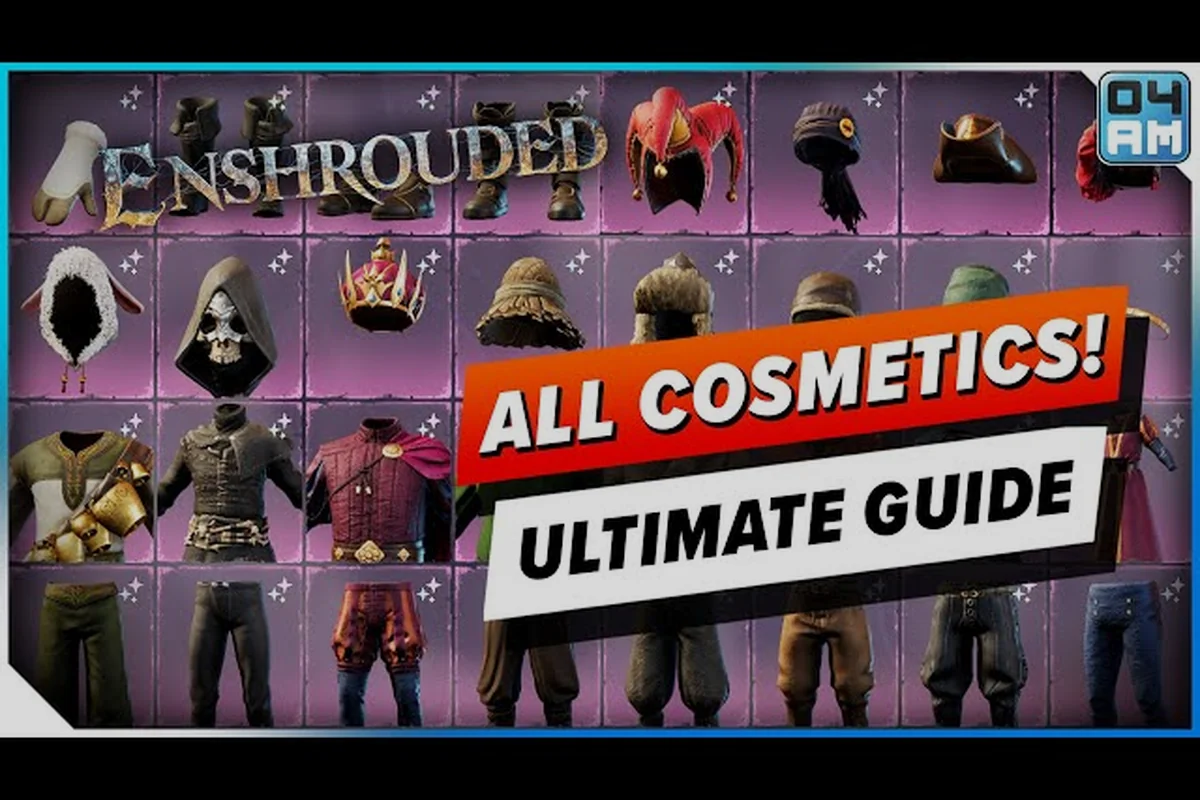
Cosmetics in Enshrouded are earned, not bought, and this cosmetic armor guide explains how appearance slots, weapon gems, and accessories all feed the same loadout. Understanding the difference between a skin and a stat item saves you gold and frustration.
According to the official Enshrouded Steam news feed, cosmetic armor pieces are typically introduced or adjusted alongside major content updates, so it's worth checking the the Enshrouded changelog on Steam to confirm when specific sets became available.
How Cosmetic Armor Works in Enshrouded
The cosmetic armor guide starts with a simple truth: Enshrouded separates what your Flameborn looks like from what your gear actually does. Appearance is handled through a transmog-style system, while your combat power comes from the armor sets, weapons, and gems you socket into them. That split means you can chase a striking outfit without sacrificing the resistances that keep you alive inside the Shroud.
According to the official Enshrouded fan gear store, the game itself offers no redeemable codes — cosmetics are earned in game, through Twitch Drops, or bought from survivors with in-game gold coins rather than codes. Real-world merchandise exists separately, so don't expect a code from a plushie to unlock anything digital. Several cosmetic sources are worth tracking:
-
Twitch Drops — limited outfits such as the Efflorescent Hope set, claimed by watching partnered streams during drop windows.
-
Survivor vendors — rescued NPCs sell cosmetic pieces for gold coins once their workshops are built.
-
Deluxe Upgrade Pack — adds an artbook and world map rather than armor, both updated in hotfix 1.0.0.1.
-
Event rewards — seasonal or collaboration items that occasionally rotate back into availability.
The key takeaway is that cosmetics never carry stats. If you want damage or defense, you need to look at the gear underneath the skin — which is exactly where weapon gems and accessories come in. Players who treat a pretty outfit as a power spike usually end up confused when their DPS barely moves.
Appearance Slots vs. Stat Slots
Appearance slots let you override the visual of an equipped item while keeping its real attributes intact. This is why a fully transmogged Flameborn can look like a level 5 wanderer while wearing endgame plate. The stat slot still governs your resistances, so the cosmetic layer is purely presentational.
Because the two systems are independent, you can freely experiment with looks without touching your build. Swap a cape, change a helmet skin, and your damage numbers stay exactly where they were. That freedom is the whole point of the cosmetic armor guide — style and survival don't have to compete.
Where Cosmetics Come From
Most cosmetics arrive through gameplay milestones rather than a storefront. Rescuing survivors and completing their workshop quests unlocks vendor stock, while Twitch Drops reward watching streams during announced windows. Community reports note that drop campaigns tend to return, so missing one outfit isn't permanent.
Gold coins are the main currency for cosmetic purchases, and you earn them by selling loot and completing objectives. Since cosmetics don't compete with gear for materials, spending gold on an outfit never slows your combat progression — a design choice that keeps the two systems cleanly separated.
Weapon Gems: The Real Power Layer
If cosmetics are the paint, weapon gems are the engine. This part of the cosmetic armor guide shifts to the mechanics that actually change your damage output. Gems socket into weapons and grant percentage-based bonuses, and the 1.0 changelog rebalanced several of them significantly.
The official Steam news post for the 1.0 changelog notes that weapon gems were rebalanced, with the Gem of Toxic Reaction climbing from roughly +21% DPS at level 10 to about 65% at level 50. That scaling curve is the single most important thing to understand about gems: their value grows with your character level, so a gem that feels weak early can become a build-defining pick later.
Gems also no longer harm base animals, a quality-of-life change that matters if you keep livestock at your base. Before that fix, certain damage-over-time gems could injure your own farm animals, which made them awkward for players who also ran husbandry. Here's how the main gem categories compare:
| Gem Type | Primary Effect | Best For | Scaling |
|---|---|---|---|
| Gem of Toxic Reaction | Poison damage over time | Sustained DPS builds | +21% at Lv10 to ~65% at Lv50 |
| Gem of Battle Mania | Attack speed and aggression | Melee burst windows | Strong at mid-to-high level |
| Necromancy Gem | Summon/minion synergy | Battlemage and summoner setups | Scales with minion investment |
| Elemental gems | Fire, frost, lightning bonuses | Class-matched casters | Flat plus percentage |
| Utility gems | Stamina, mana, recovery | Survival-focused builds | Modest but consistent |
The table makes one thing clear: there's no universal best gem. Your pick depends on whether you're stacking poison ticks, chasing attack speed, or leaning into minions. The cosmetic armor guide framing helps here — treat gems as the invisible stats behind your visible outfit.
How Sockets and Rebalancing Work
Weapons carry a limited number of sockets, and each gem occupies one slot. Because sockets are finite, you're always making a trade-off: a damage gem versus a utility gem, or a scaling gem versus a flat bonus. The 1.0 rebalance pushed percentage gems toward stronger late-game scaling, which rewards players who plan their sockets around level 50 rather than level 20.
Rebalancing also means older guides can go stale. If a source quotes a gem's bonus without a patch reference, treat the number as approximate. The safest approach is to check the current in-game tooltip, since Keen Games has adjusted gem values across multiple updates.
Matching Gems to Your Weapon Type
Different weapon families benefit from different gems. Fast one-handed weapons love attack-speed and on-hit effects because they trigger more often, while slow two-handed weapons prefer flat damage multipliers that make each swing count. Casters socketing elemental gems want bonuses that match their spell school so the percentage applies to the right damage type.
A practical rule: match the gem's trigger condition to how often your weapon hits. On-hit gems on a greatsword waste potential, while burst gems on a dagger underperform. If you're still deciding which weapon family suits your playstyle, the weapons guide breaks down how each class scales before you commit sockets.
Matching Gems to Your Damage Rotation
Choosing the best weapon gems comes down to what your build does moment to moment. A poison-stacking ranger and a summon-focused battlemage want completely different socket setups, and forcing one meta onto both wastes potential. This section maps gems to playstyles so you can socket with intent.
The Gem of Toxic Reaction is the standout for sustained damage. With its scaling reaching roughly 65% at level 50, it rewards builds that keep hitting the same target and let the damage-over-time stack. Rangers and any weapon with a fast attack cadence get the most from it.
The Gem of Battle Mania suits aggressive melee players who want faster swings and more frequent critical windows. It pairs naturally with a Warrior or Assassin tree, where attack speed compounds with skill bonuses. If your damage comes from landing many hits quickly, this gem amplifies that rhythm.
The Necromancy Gem is the specialist pick. It shines in summoner and battlemage setups where minions or sustained spell effects do the heavy lifting. Because it scales with minion investment, it's a poor choice for a pure weapon build and a strong one for anyone leaning into the Battlemage skill area.
| Playstyle | Recommended Gem | Why It Works |
|---|---|---|
| Poison ranger | Gem of Toxic Reaction | DoT stacks scale to ~65% at Lv50 |
| Aggressive melee | Gem of Battle Mania | Faster swings, more crit windows |
| Summoner battlemage | Necromancy Gem | Scales with minion investment |
| Elemental caster | Matching elemental gem | Percentage applies to spell school |
| Survival hybrid | Utility gem | Stamina and mana sustain |
The Necromancy Gem Explained
The Necromancy Gem rewards players who invest in minions and sustained effects rather than raw weapon hits. Its value grows as your summon count and minion damage rise, which means it underperforms on a character with no minion investment. For a battlemage who splits time between spells and summons, though, it can carry a build through the toughest Shroud zones.
Because it's a scaling gem, socket it early and let it mature with your level. Community testing suggests the payoff curve is back-loaded, so don't judge it by its level 15 performance. If you plan to main a summoner, this is one of the few gems worth committing a socket to permanently.
The Gem of Battle Mania Explained
The Gem of Battle Mania is built for tempo. It pushes attack speed and aggression, which means your damage-per-second climbs through frequency rather than per-hit size. That makes it ideal for one-handed weapons, dual-wield setups, and any build that already leans on critical strikes.
Pair it with a class that has attack-speed passives and the effect compounds. Pair it with a slow two-handed weapon and you'll see far less benefit, because the gem's trigger rate depends on how often you swing. Match it to a fast weapon and it earns its socket.
Accessories and Loadout Synergy
Accessories round out the build. This section of the cosmetic armor guide covers rings, amulets, and similar pieces that slot alongside your armor and gems. While cosmetics change your look, accessories change your numbers — and they're often the cheapest way to patch a weakness in your build.
Accessories typically provide flat or percentage bonuses to attributes like stamina, mana, or specific damage types. Because they don't compete with armor for the same slots, you can stack them freely. A character with strong armor and weak mana recovery can fix that gap with a single amulet rather than rebuilding their entire set.
Synergy is where accessories shine. A poison ranger running the Gem of Toxic Reaction benefits from an accessory that boosts damage-over-time or attack speed, because both multiply the same output. A summoner with the Necromancy Gem wants accessories that lift minion damage or spell potency. The goal is to stack bonuses that reinforce each other instead of spreading thin.
| Accessory Slot | Typical Bonus | Best Paired With |
|---|---|---|
| Amulet | Mana or spell potency | Casters and battlemages |
| Ring (left) | Damage type bonus | Element-matched builds |
| Ring (right) | Stamina or recovery | Melee and hybrid builds |
| Trinket | Utility or resistance | Shroud exploration |
Building a Coherent Loadout
A coherent loadout means every piece points the same direction. If your weapon gem boosts poison, your accessories should boost poison or attack speed, and your armor should support the playstyle rather than fight it. Mixing a DoT gem with burst-focused accessories splits your damage and weakens both.
Start by picking your primary damage source, then layer gems and accessories that amplify it. Resistances and sustain come second, because surviving longer only matters if your damage is meaningful. For players juggling multiple characters, the co-op class guide explains how roles divide so each build can specialize instead of covering everything.
When to Swap Accessories
Swap accessories when your content changes, not when your mood does. Shroud exploration rewards resistance and sustain, while boss fights reward raw damage and burst. Keeping two accessory sets — one for exploration, one for combat — lets you adapt without resocketing gems every session.
Because accessories are cheap to swap compared to reworking armor, they're your flexible layer. Use them to cover the weakness your current content exposes, then switch back when you return to base building or farming. That flexibility is the quiet advantage of the accessory system.
Practical Tips for Cosmetics and Gems
A few habits separate players who waste resources from those who don't. First, never socket a scaling gem into a weapon you'll replace in two levels — the gem's value depends on level, so moving it to your endgame weapon matters. Second, treat cosmetics as free expression: since they carry no stats, there's no wrong outfit.
Third, check gem tooltips after every major patch, because Keen Games has rebalanced values more than once. A number you memorized last season may be outdated. Fourth, keep a spare accessory set for Shroud runs so you're not caught without resistance when the fog closes in. Finally, remember that gear you outgrow can be recycled. If you're holding a pile of obsolete weapons and armor, the gear salvage guide explains how to recover materials and keep your storage clean while you chase better sockets.
-
Move scaling gems to endgame weapons — their percentage grows with level.
-
Keep two accessory sets — exploration and combat.
-
Recheck tooltips after patches — gem values shift.
-
Treat cosmetics as stat-free — pick looks freely.
-
Salvage old gear — recover materials instead of hoarding.
Frequently Asked Questions
Does cosmetic armor affect my stats in Enshrouded?
No. Cosmetics are purely visual and never change your resistances, damage, or attributes. Your real power comes from the armor set, weapon, gems, and accessories underneath the appearance layer. That separation means you can wear any outfit you like without weakening your build, which is the core promise of the cosmetic armor guide.
What is the best weapon gem for a poison build?
The Gem of Toxic Reaction is the top pick for poison-focused builds because its damage-over-time bonus scales from roughly +21% at level 10 to about 65% at level 50, according to the official 1.0 changelog. Pair it with attack-speed accessories to trigger the effect more often.
Is the Necromancy Gem worth using?
Only if you invest in minions or sustained spell effects. The Necromancy Gem scales with minion investment, so it underperforms on a pure weapon build and shines on a summoner or battlemage. Socket it early and let it mature, since its payoff curve is back-loaded rather than immediate.
How do I get cosmetic outfits without paying?
Earn them through Twitch Drops, survivor vendors who sell pieces for gold coins, and event rewards. The official fan gear store confirms the game has no redeemable codes, so cosmetics come from gameplay or drop campaigns rather than purchases. Missing a drop window isn't permanent, since campaigns often return.
Can I swap accessories without losing my gems?
Yes. Accessories occupy separate slots from weapon gems, so changing a ring or amulet never disturbs your socketed gems. This makes accessories the flexible layer of your loadout — swap them to match exploration or boss content, then switch back without touching your weapon setup.
Cosmetics, gems, and accessories form three independent layers of the same loadout, and keeping them separate is what makes Enshrouded's build system flexible. Dress your Flameborn however you like, socket gems that match your damage style, and use accessories to patch weaknesses as content changes. Get those three layers aligned and your build handles both the Shroud and the toughest bosses without a single compromise.