
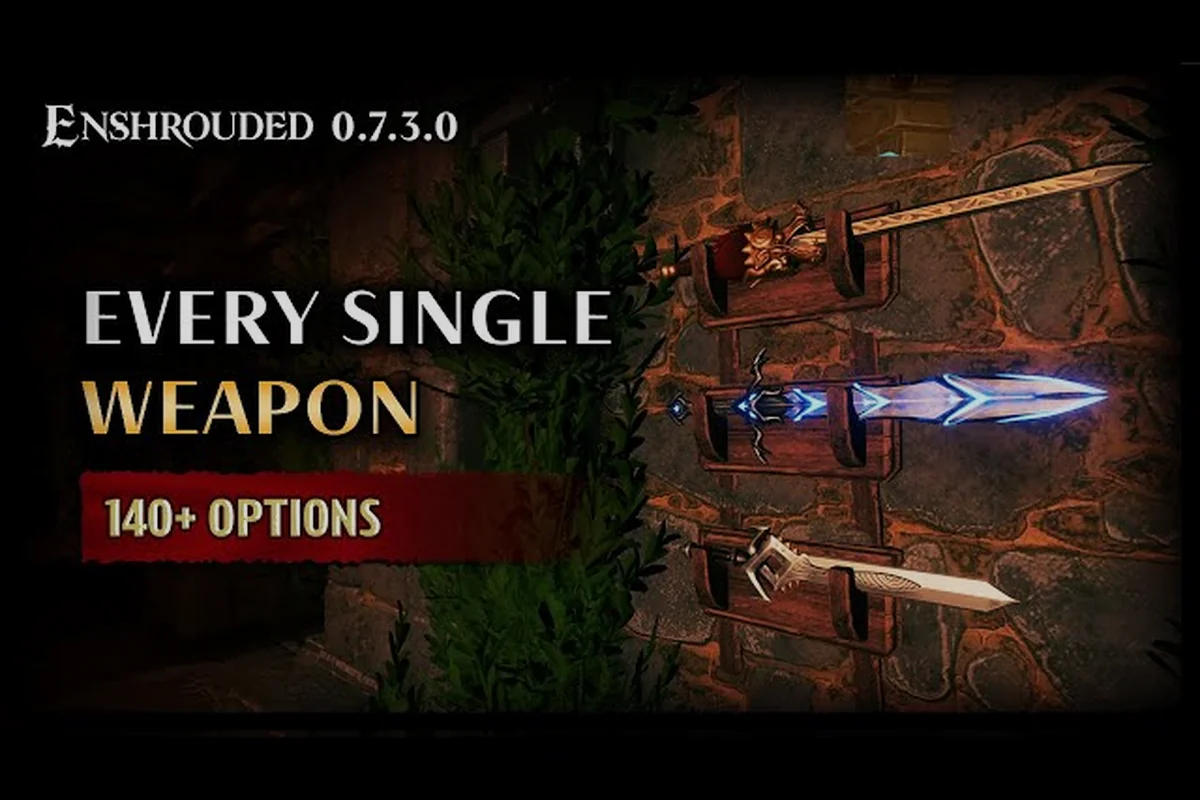
Melee daggers got a serious glow-up in the Enshrouded 1.0 combat rework, but the real question most Flameborn ask is how they stack up against ranged options. This Enshrouded daggers guide breaks down daggers, bows, wands and staves side by side so you can pick the weapon that actually fits your build.
What Changed for Daggers in the 1.0 Combat Rework
The biggest shift for dagger players arrived with the full 1.0 release, and it reshaped where these weapons live in the skill tree. According to the the Enshrouded changelog on Steam, dagger skills were moved out of the Warrior area and into the Assassin tree, which means the fantasy of a fast, evasive blade user is now mechanically supported instead of bolted onto a tanky archetype.
That change matters because it separates two very different playstyles. A Warrior dagger build used to inherit heavy armor passives that did little for a light, mobile weapon. Now the Assassin tree leans into crit windows, backstab positioning and stamina-efficient combos, so daggers finally have a home that rewards the way they're meant to be played.
Blocking also changed in a way that quietly benefits dagger users. The 1.0 patch made blocking follow your camera direction, which feels far more responsive when you're weaving in and out of melee range. For a weapon that relies on quick repositioning, that responsiveness is the difference between a clean dodge-and-stab and a face-full of damage.
Here's how the four weapon families compare at a glance, and the distinctions matter more than ever now that skill trees are siloed by archetype. Daggers and Bows both scale off Dexterity, but they split into the Assassin and Ranger trees respectively, so a hybrid Dex build has to commit to one identity rather than cherry-picking passives. Wands and Staves share Intelligence under the Battlemage tree, with wands favoring medium-range sustained DPS and staves leaning into AoE and utility. For dagger players, the key row is the first one: your primary stat is Dexterity, your range is short melee, and your best use case is burst damage, backstabs and mobility — all funneled through the Assassin tree.
| Weapon Type | Primary Stat | Range | Best For | Skill Tree |
|---|---|---|---|---|
| Daggers | Dexterity | Melee (short) | Burst, backstabs, mobility | Assassin |
| Bows | Dexterity | Long | Kiting, single-target picks | Ranger |
| Wands | Intelligence | Medium | Sustained magic DPS | Battlemage |
| Staves | Intelligence | Long | AoE and utility spells | Battlemage |
The takeaway is simple: daggers are no longer a niche pick hiding behind Warrior passives. They're a dedicated Assassin identity, and that reframing is the foundation for everything else in this guide. Concretely, that means every point you invest past the Assassin entry node should reinforce a Dexterity-scaling burst loop — opening from stealth or a flank, cashing in a backstab crit window, then spending the stamina you saved on a repositioning roll rather than a shield block. Treat the Warrior passives you may have leaned on before 1.0 as a dead end, since they no longer feed dagger damage or crit scaling at all.
Enshrouded Daggers Guide: Core Mechanics and Scaling
Daggers scale primarily with Dexterity, and their damage profile rewards precision over raw uptime. You're not trying to facetank a boss and trade hits; you're looking for the two-second window where a backstab or a crit chain deletes a chunk of health. Understanding that rhythm is what separates a dagger player who struggles from one who melts enemies.
The Assassin tree supports this with passives that boost critical hit chance, reduce stamina cost on light attacks, and reward attacking from behind or from stealth. Because daggers swing fast, even small percentage boosts to crit or stamina efficiency compound quickly across a full combo.
Weapon gems also play a role in how daggers perform at higher levels. The 1.0 rework rebalanced several gems, and the Gem of Toxic Reaction is a good example of how scaling changed: it went from roughly +21% DPS at level 10 up to about 65% at level 50, according to the official changelog. That kind of curve means gem choice matters far more in the late game than it did during early access.
A few practical dagger mechanics worth internalizing: backstab multipliers apply only when you strike from outside an enemy's frontal cone, so a single sidestep around a wind-up animation can double your effective damage on that hit. Stamina drains faster than the bar refills during a full light-attack chain, meaning a three-hit combo into a dodge costs roughly the same as two heavy swings — plan your burst around the recovery frames, not the swing itself. Crit chance from Assassin passives also stacks multiplicatively with Dexterity scaling, so a dagger at 30 Dex with a 25% crit passive outperforms a raw-damage alternative once your gear pushes past level 30.
-
Backstab positioning multiplies your damage, so circle behind enemies rather than trading blows head-on.
-
Stamina management is your real resource — a dagger combo that empties your bar leaves you unable to dodge.
-
Status gems like Toxic Reaction scale hard, so socket them once you're pushing level 40+ content.
-
Light armor keeps your dodge and movement snappy, which matters more than raw defense for this playstyle.
If you're still deciding how daggers fit into a broader character plan, the Enshrouded class guide walks through how each archetype's skill tree shapes your weapon choices. Daggers sit firmly in the Dexterity camp, so any build that dumps points into Strength or Intelligence will feel them underperform.
Enshrouded Bows Guide: The Ranged Dexterity Alternative
If you love Dexterity scaling but want distance instead of danger, bows are the natural sibling to daggers. An Enshrouded bows guide really comes down to one idea: you trade burst melee damage for safety and range, and you lean on positioning rather than dodge timing. The Ranger tree supports this with passives for draw speed, arrow damage and mobility while aiming.
The question of the Enshrouded best bow depends heavily on where you are in progression. Early on, any decent bow with a steady draw will carry you through the starting biomes. Later, you want a bow that pairs well with your arrow type and gem setup, because arrow choice can swing your effective DPS as much as the bow itself.
Bows shine in specific situations that daggers struggle with: flying enemies like the Fell Wisp and Scavenger that hover out of melee reach, bosses with long wind-up attacks such as the Fell Dragon where dodge-timing a dagger combo is far riskier than firing from range, and open-terrain solo exploration where a Ranger-tree build can kite packs indefinitely. The trade-off is burst — a dagger backstab can out-damage a full arrow volley in a single window, so most Dexterity players keep both weapons slotted and swap based on encounter type rather than committing to one.
| Scenario | Daggers | Bows |
|---|---|---|
| Fighting flying enemies | Awkward | Ideal |
| Boss with long wind-up attacks | Risky | Safe |
| Clearing tight corridors | Strong | Limited |
| Solo exploration | Good | Excellent |
| Group DPS support | High burst | Consistent |
The trade-off is real. Bows let you chip away at a boss from a safe distance, but they lack the explosive burst a well-timed dagger backstab delivers. Many Dexterity players actually carry both — daggers for close-quarters cleanup and a bow for anything that flies or hits too hard to approach.
Arrow selection ties directly into this. Different arrow types change your damage output, and knowing which to craft for which enemy is a skill in itself. The Enshrouded arrows and spells list breaks down the available ammunition and magic options so you can match your loadout to the fight ahead.
Enshrouded Wands Guide: Intelligence-Based Sustained Damage
Wands occupy a middle ground that daggers and bows can't reach. An Enshrouded wands guide has to start with the 1.0 changes, because wands gained a lot in the combat rework. According to the official changelog, wands received heavy attacks plus free-aim and evasive/aerial attacks, which turned them from a simple auto-attack tool into a genuinely expressive weapon.
That free-aim addition is the headline. Before 1.0, wand combat was largely about locking on and holding a button. Now you can aim manually, fire mid-dodge, and use heavy attacks to burst down targets. For an Intelligence build, that's a massive quality-of-life upgrade that makes wand play feel active rather than passive.
Wands scale with Intelligence and benefit from the Battlemage tree, which boosts spell damage, mana efficiency and potency. Because wands fire quickly and cost mana per shot, your real limiting factor is mana sustain — which is why mana-focused food and gear matter so much for this playstyle.
When people ask about the Enshrouded best wand, the honest answer is that wand choice matters less than your Intelligence stat and mana economy. A wand with good base damage and a gem that complements your spell rotation will outperform a marginally "better" wand that doesn't fit your build.
Key wand considerations: Intelligence is your primary damage multiplier, so every point invested there raises both light and heavy attack output — a 30 Int build can roughly double the per-hit damage of a 15 Int build before gear bonuses. Pair that with a gem socketed into your wand that matches your spell school (fire, ice or lightning), since elemental synergy scales harder than raw base damage once your Int climbs. Mana economy is the other half: wands drain mana per shot, so mana regeneration food buffs and Battlemage passives determine whether you sustain DPS or stall mid-fight. Crit chance and potency rolls on gear round out the build, letting a well-tuned wand out-damage a higher-tier wand with mismatched stats.
-
Mana regeneration gear and food keep your damage flowing without downtime.
-
Free-aim rewards players who position well and lead their shots.
-
Heavy attacks give you burst options that pure light-attack spam lacks.
-
Potency stats amplify your overall magic damage, so stack them where you can.
Wands are the most forgiving ranged option for solo players because you can kite, aim freely and still deal steady damage. The catch is that they demand mana management, which daggers and bows simply don't. A dagger build, by contrast, spends stamina on dodges and backstabs rather than mana, so it never stalls out mid-fight the way a wand can once your blue bar empties — you just need to stay in melee range and land your backstab multiplier. That trade-off defines the whole ranged-versus-melee split in the Enshrouded daggers guide: wands win on safety and uptime at range, daggers win on burst and resource independence, and bows sit between them with cheaper shots but no equivalent to the wand's free-aim heavy attacks.
Enshrouded Staves Guide: AoE, Utility and Burst Magic
Staves are the heavy artillery of Intelligence builds. An Enshrouded staves guide is really about control and area damage: where wands chip away at single targets, staves let you nuke groups, apply crowd control and shape the battlefield. They share the Battlemage tree with wands, so many mages run both — a wand for sustained pressure and a staff for big moments.
The Enshrouded best staff for your build depends on which spells you've unlocked and how you like to fight. Some staves favor raw AoE damage, others lean into utility like healing or crowd control. Because staves consume mana in larger chunks, they reward players who plan their spell rotation rather than spamming.
Here's how the two magic weapons split their roles: Wands excel at sustained single-target pressure with low mana cost per shot, free-aim plus lock-on, and are ideal for kiting and finishing stragglers. Staves trade that efficiency for burst and AoE damage, but each cast drains mana in larger chunks, so they demand planned spell rotations rather than spam. Both scale off the Battlemage skill tree, which is exactly why most Intelligence builds carry one of each — a wand to chip enemies down between cooldowns, and a staff to delete grouped packs or apply crowd control when the fight turns.
| Feature | Wands | Staves |
|---|---|---|
| Damage style | Sustained single-target | Burst and AoE |
| Mana cost | Low per shot | High per cast |
| Aiming | Free-aim + lock-on | Mostly lock-on |
| Best scenario | Kiting, sustained DPS | Group clear, control |
| Skill tree | Battlemage | Battlemage |
The synergy between wands and staves is why many Intelligence players carry both. You open a fight with a staff AoE to soften a group, then swap to a wand to finish stragglers efficiently. That two-weapon rhythm is one of the most satisfying parts of playing a mage in Enshrouded.
If you're building a mage and want to know which armor supports the playstyle, the Enshrouded armor sets guide covers the sets that boost Intelligence and mana. Pairing the right armor with your staff and wand choices is what turns a decent mage into a dominant one.
Choosing Between Daggers, Bows, Wands and Staves
The right weapon comes down to three questions: which stat are you investing in, how do you like to fight, and what content are you tackling? Daggers and bows both scale with Dexterity, so a Dexterity build can freely swap between them. Wands and staves both scale with Intelligence, so a mage can run either or both.
Here's a decision framework to make the choice concrete, scored against the three questions above. If you're running a Dexterity build and already have Merciless Strike unlocked for dagger backstabs, daggers win any fight where you can reach the enemy's back — the 1.0 rework pushed dagger backstab multipliers high enough that a single well-placed strike out-damages several bow volleys. If your Dexterity investment is lighter or you're clearing open Shroud zones solo, bows win on uptime because you never eat a melee punish. Intelligence builds split the same way: wands for sustained single-target pressure where mana potions are plentiful, staves when a group of enemies clusters and one Fireball or Chain Lightning rotation clears the pack.
-
Pick daggers if you enjoy high-risk, high-reward melee, love backstab positioning, and want burst damage in tight spaces.
-
Pick bows if you want Dexterity scaling without the danger of melee, and you value safe, consistent ranged damage.
-
Pick wands if you want active, free-aim magic with steady damage and don't mind managing mana.
-
Pick staves if you want big AoE bursts and crowd control, and you're comfortable planning spell rotations.
A useful rule of thumb: solo players often gravitate toward bows or wands because range keeps them alive, while group players can afford to run daggers for burst or staves for area control. None of these options is strictly "best" — they solve different problems, and the 1.0 rework made each of them viable in its own lane.
One more consideration is gem investment. Because gems now scale dramatically with level, the weapon you commit your best gems to is effectively the weapon you're maining. Spreading rare gems across four weapon types leaves all of them mediocre, so pick a lane and reinforce it.
Practical Tips for Ranged and Melee Weapon Builds
Beyond picking a weapon, a few habits separate players who thrive from those who struggle. These apply whether you're running an Enshrouded daggers guide build or a full mage setup. The biggest one is stamina discipline: daggers and bows both drain stamina on every swing or shot, so chaining attacks without a breather leaves you unable to dodge when it matters. Pair that with the right damage type — slash for fleshy foes, blunt for skeletons — and you'll hit noticeably harder without changing gear. Positioning matters too: backstabs with daggers and headshots with bows reward flanking over face-tanking.
First, match your armor to your damage stat, because Enshrouded armor sets are stat-gated rather than cosmetic. Light armor like the Assassin set feeds Dexterity, which scales dagger and bow damage and pairs with the dodge-heavy playstyle those weapons demand; Intelligence builds instead want sets such as the Mage or Healer armor that stack mana, mana regeneration, and spell potency for wands and staves. The trap is mixing types: wearing heavy armor on a Dexterity dagger build adds weight and stamina drain while contributing almost nothing to your damage multiplier, so your backstabs and bow shots quietly underperform. Check each piece's primary attribute bonus before equipping, and respec your gear whenever you swap between an Enshrouded daggers guide build and a caster setup.
Second, treat food and rest buffs as combat stats, not afterthoughts. Stamina and mana regeneration directly gate how long you can keep attacking, and a rested buff can meaningfully extend your effective uptime in a tough fight. The Enshrouded sleep and rested buff guide explains how to stack these bonuses before a boss attempt.
Third, keep a backup weapon, because Enshrouded's damage types are hard counters rather than soft modifiers. A dagger main who slots a bow handles flying enemies like the Fell Wispwyvern that melee simply cannot reach, while a wand mage who carries a staff can swap to AoE casts when a Shroud nest spawns a pack instead of a single target. The key is that your backup shares your scaling stat: a Dexterity dagger build pairs naturally with a bow, and an Intelligence caster pairs with a staff, so you never waste attribute points on a weapon that hits like a wet noodle. Carrying one off-stat weapon "just in case" costs you weight, stamina drain, and a gear slot that could feed your primary multiplier, so commit to a matched pair instead.
Finally, respect the Shroud. No weapon build survives staying in the fog too long, so plan your routes and retreat to safety before your timer runs out. The best DPS in the world means nothing if you die to environmental damage.
Frequently Asked Questions
Are daggers good in Enshrouded 1.0?
Yes. The 1.0 rework moved dagger skills into the Assassin tree, giving them a dedicated home built around crits, backstabs and mobility. With the right Dexterity investment and status gems, daggers deliver some of the highest burst damage in the game, especially against single targets you can flank.
What is the best bow for a Dexterity build?
There's no single universal answer, because the best bow depends on your arrow type and gem setup. Early on, any steady-draw bow works fine. Later, prioritize a bow that complements your arrows and socket a scaling damage gem, since gem bonuses now grow sharply with level.
Do wands or staves deal more damage?
They serve different roles rather than one being strictly stronger. Wands offer sustained single-target damage with low mana cost per shot, while staves deliver burst AoE and crowd control at a higher mana cost. Many mages run both, opening with a staff and finishing with a wand.
Can I use daggers and a bow on the same character?
Absolutely. Both scale with Dexterity, so a single Dexterity build can swap between them freely. Carrying daggers for close-range burst and a bow for flying or dangerous enemies is one of the most flexible loadouts in Enshrouded, and it costs you nothing in stat efficiency.
Which weapon is best for solo players?
Bows and wands are the most forgiving solo options because range keeps you out of danger while you deal steady damage. That said, a skilled dagger player can solo effectively by leaning on mobility and backstabs. The 1.0 rework made every weapon family viable for solo play.
Daggers, bows, wands and staves each carved out a clearer identity in the 1.0 combat rework, and the through-line is that your stat investment should drive your weapon choice. Dexterity players get daggers and bows; Intelligence players get wands and staves. Pick the lane that matches how you like to fight, commit your best gems to it, and support it with the right armor and buffs — that combination, more than any single weapon, is what makes a build click.