
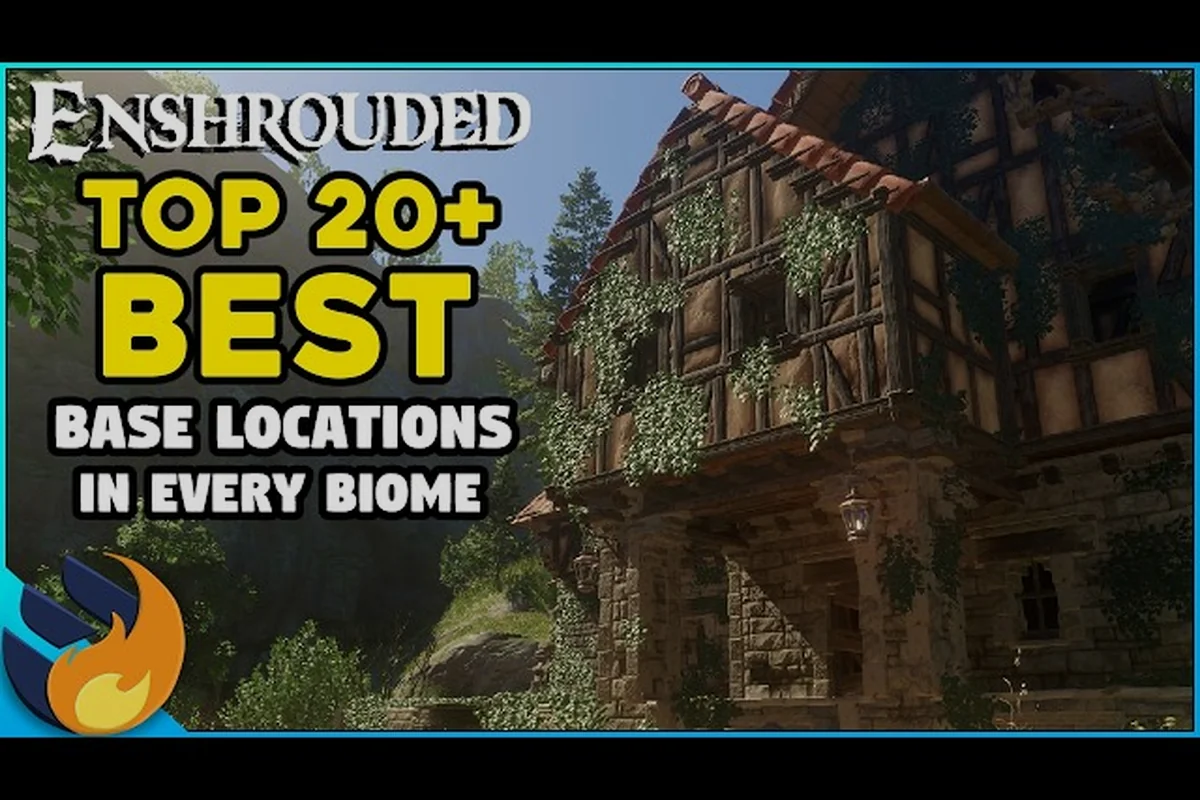
Picking the right Enshrouded best biome for a base decides how much time you spend hauling ore versus actually building. Embervale's regions gate resources, enemy levels and Shroud depth behind geography, so a home in the wrong zone quietly taxes every session. This breakdown compares each biome by resource access, level range and danger so you can commit with confidence.
Enshrouded Biome Order and Recommended Level by Region
The map unfolds in a deliberate sequence, and the Enshrouded biome order doubles as a difficulty ladder. Each region raises enemy health, Shroud intensity and material tier, so wandering north early usually ends in a corpse run rather than a shortcut. Understanding the Enshrouded recommended level by region keeps your build and gear in step with what the terrain throws at you.
Community data and the official Steam store page both frame Embervale as a survival action RPG where progression is earned through exploration, not handed out. That means your base location should match your current tier, not the tier you hope to reach next week.
| Biome | Recommended Level | Shroud Depth | Signature Resource |
|---|---|---|---|
| Springlands | 1-8 | Shallow, forgiving | Wood, stone, flax |
| Revelwood | 8-15 | Moderate, patchy | Resin, clay, copper |
| Nomad Highlands | 15-25 | Deep corridors | Iron, salt, amber |
| Kindlewastes | 25-35 | Extreme heat zones | Obsidian, sulfur, gold |
| Blackmire | 30-40 | Heavy blight | Mycelium, rare herbs |
| Albaneve Summits | 35-45 | Cold plus Shroud | Silver, ice crystal |
| Cinder's Cradle | 40-50 | Lava and floating isles | Endgame alloys |
The Springlands is the tutorial biome, and its shallow Shroud pockets barely threaten a fresh Flameborn. Revelwood introduces verticality and your first real difficulty spike, while the Nomad Highlands acts as the mid-game crucible where iron demand explodes. The Kindlewastes and Blackmire form the 1.0 endgame band, and the northern Albaneve Summits plus Cinder's Cradle sit at the top of the curve. If you want a deeper walkthrough of how these regions chain together, the biome progression breakdown maps each transition. The short version: never skip a tier, because gear and skill points lag behind geography.
Enshrouded Best Biome for Resources
Resource density, not scenery, is what separates a convenient base from a constant commute. The Enshrouded best biome for resources depends on what you're farming right now, since wood and stone matter early while iron, silver and obsidian dominate the late game. Placing a base near a cluster of nodes you actually need beats a pretty vista every time.
Players on the r/Enshrouded community hub frequently note that travel time, not combat, is the real grind once your build stabilizes. A base ten seconds from an iron vein saves hours across a playthrough. The math is stark: a round trip to a distant mine can eat two to three minutes of gliding and running, so a 20-node iron haul that takes six trips from a far base burns roughly 15 minutes, versus under three from an outpost parked beside the deposit. Multiply that across the dozens of iron runs needed for a full Wolf armor set and the gap stretches into hours. That's why the resource table below weights node density so heavily — proximity to the nodes you're actively farming matters more than any single biome's scenery.
| Resource | Best Biome | Node Density | Why It Matters |
|---|---|---|---|
| Wood and flax | Springlands | Very high | Early crafting, bandages |
| Copper and clay | Revelwood | High | First metal tools |
| Iron | Nomad Highlands | Very high | Weapons, armor, structures |
| Silver | Albaneve Summits | Moderate | Late-game gear |
| Obsidian | Kindlewastes | Moderate | High-tier crafting |
| Sulfur | Kindlewastes | Low but clustered | Explosives, potions |
| Mycelium | Blackmire | High | Alchemy, rare recipes |
The Nomad Highlands wins for most mid-game players because iron feeds nearly every upgrade path, and the region's open plateaus make terraforming easy. For pure endgame yield, the Albaneve Summits and Cinder's Cradle offer silver and advanced alloys, but the cold and lava hazards demand insulated gear before you settle in.
A practical trick reported by players is building a small forward outpost near a resource cluster while keeping your main base in a safer region. That hybrid approach captures the Enshrouded best biome for resources without abandoning the comfort of a low-danger home. If you're planning that split, the outpost building guide covers altar placement and layout efficiency.
Which Biome Is the Hardest in Enshrouded?
The Enshrouded hardest biome is a moving target, because "hard" means different things depending on your build. For raw environmental punishment, Cinder's Cradle takes the crown with its lava wasteland below and floating Shroud-tendril islands above. For sustained attrition, Blackmire wears players down with blight and dense enemy packs rather than a single lethal hazard.
According to the Steam's official announcement log, Cinder's Cradle fills the northern regions past the Veilwater Basin and sits between Blackmire and Veilwater Basin in size, adding twelve new Shroud Roots. It has two vertical levels connected by tendrils of the Shroud, which makes navigation as dangerous as the enemies themselves.
| Biome | Primary Hazard | Enemy Pressure | Base Viability |
|---|---|---|---|
| Springlands | None | Very low | Excellent |
| Revelwood | Shroud patches | Low | Excellent |
| Nomad Highlands | Deep Shroud corridors | Moderate | Very good |
| Kindlewastes | Heat, open exposure | High | Good with shade |
| Blackmire | Blight, tight terrain | High | Moderate |
| Albaneve Summits | Cold damage | Very high | Moderate |
| Cinder's Cradle | Lava, floating isles | Extreme | Low |
The Kindlewastes punishes players who ignore heat management, since prolonged exposure drains stamina and health simultaneously — and unlike Blackmire's blight, heat builds even while you stand still, so a Kindlewastes base needs shade structures or a Water Well before you can safely craft. Albaneve Summits flips the script with cold damage that stacks unless you craft insulated armor, and its steep terrain makes base foundations awkward; per the table above, both regions rate only "Good with shade" and "Moderate" for base viability, well behind Springlands and Revelwood, so treat them as resource outposts rather than permanent homes.
Community reports suggest that the hardest biome for a solo player is often Blackmire, because its cramped corridors limit kiting and force close-quarters fights. For co-op groups, Cinder's Cradle is the true test, since the vertical layout splits teams and the lava below punishes any fall.
Choosing Your Base Biome by Playstyle
There is no single correct answer, because the Enshrouded best biome for a base shifts with how you actually play. A builder who loves terraforming wants flat, safe ground; a farmer wants fertile soil and water; a fighter wants to be near high-tier enemies for loot. Match the region to your habits and the game stops feeling like a commute.
The official Steam store page highlights voxel-based building and free terraforming as core features, which means almost any biome can host a functional base if you're willing to reshape the land. The question is whether that reshaping is fun or tedious for you.
| Playstyle | Ideal Biome | Reason |
|---|---|---|
| Builder and decorator | Springlands | Flat terrain, safe, scenic |
| Crafter and miner | Nomad Highlands | Iron access, open plateaus |
| Farmer and cook | Revelwood | Fertile soil, water, mild danger |
| Loot hunter | Kindlewastes | High-tier chests, dense enemies |
| Endgame optimizer | Albaneve Summits | Silver, ice crystal, top gear |
A Springlands base suits players who want a permanent, peaceful home they can expand without constant repair. A Nomad Highlands base suits the crafter who spends most sessions at the forge, since iron is the backbone of mid-game progression. For players chasing legendary drops, the Kindlewastes and Blackmire put you near the enemies that matter. Kindlewastes is a level 20-25 zone, so its high-tier chests and dense spawns of Scavenger Matrons and Fell Wretches reward a loot hunter who's already geared past the Nomad Highlands tier. Just budget for repair costs, because frequent combat chews through gear durability faster than any other activity — a single Kindlewastes run can strip a full bar of durability off your weapon, so stockpile Resin and keep a backup set at your base. Blackmire's Shroud-heavy pockets are deadlier still, but the Shroud Weaver drops and rare chests justify the risk for endgame builds.
When to Keep Two Bases
Running a main base plus a forward outpost is the most common endgame setup, and it solves the resource-versus-safety tension directly. Your main base stays in a low-danger region for crafting and storage, while the outpost sits near a resource cluster or boss arena. The Flame Altar system supports this because each altar claims its own building zone.
The tradeoff is management overhead. Two bases mean two sets of storage, two crafting stations if you want convenience, and more time spent fast-traveling. Players who keep it simple with one well-placed base often progress faster than those juggling three outposts they rarely visit.
Relocating Without Losing Progress
Moving a base is less painful than it looks, because the Flame Altar can be picked up and replaced. Dismantle your structures to recover most materials, then rebuild at the new site. The main cost is time, not resources, so relocate when the resource math clearly favors it.
A good trigger for relocation is when your current biome's nodes stop feeding your gear tier. If you're smelting iron but living in the Springlands, you're paying a travel tax every session. Move when the tax outweighs the rebuild cost.
Practical Tips for Base Placement in Any Biome
Regardless of which region you pick, a few placement habits make any base better. These apply whether you're settling in the gentle Springlands or braving the lava of Cinder's Cradle. One rule matters more than the rest: pick a spot whose Shroud timer never overlaps your build zone. Shroud pockets creep outward at night, and a base sitting on the edge of one forces constant retreats — especially in the Nomad Highlands and Kindlewastes, where the recommended level by region climbs fast and wandering elites hit harder. Flat ground also beats scenic cliffs, since terraforming a steep slope into a usable floor costs far more time than scouting a few extra minutes on foot.
-
Scout on foot before placing the altar. Walk the perimeter to check for Shroud edges, enemy spawns and slope issues that a map view hides.
-
Build near water when possible. Farming, cooking and some crafting recipes need it, and hauling water is a chore you can avoid entirely.
-
Keep a clear escape route. A base boxed in by cliffs or dense forest becomes a trap during a Shroud surge or a wandering elite.
-
Place storage near crafting stations. Reducing walk time inside your own base adds up over dozens of sessions.
-
Leave room to expand. Terraforming is powerful, but starting with extra flat space saves hours of digging later.
-
Check the Shroud timer near your site. Some biomes have Shroud pockets that creep close to otherwise safe ground, and a base on the edge of one is a constant nuisance.
Scouting a Flat Build Site on Foot
Flat ground is the single biggest quality-of-life factor for any base, because voxel building on a slope forces constant foundation work. Look for plateaus, dried lakebeds and open meadows, then test the terrain by placing a few temporary blocks. If the ground fights you, keep walking.
The Nomad Highlands and Springlands offer the most naturally flat sites, while Albaneve Summits and Cinder's Cradle demand heavy terraforming. In practice, a Springlands meadow near the starting Ancient Spire lets you drop a 4x4 foundation grid with almost zero digging, whereas Cinder's Cradle's volcanic ridges force you to cut into basalt and level lava-adjacent shelves before anything sits flush. If you love shaping terrain, the harder biomes reward that effort with dramatic views and rare resources like obsidian, but expect to spend far more time on voxel excavation than on actual construction.
Future-Proofing for Updates
Enshrouded is still evolving, and the 1.0 update reshaped the northern map with new regions and Shroud Roots. Building in a region that's likely to expand or change carries some risk, so keep your most valuable storage centralized and your structures modular. A base you can partially dismantle and rebuild adapts better than a monolithic fortress.
Community data from the Enshrouded community wiki tracks biome mechanics and may lag behind the latest patch, so treat its numbers as estimates and verify in-game. For a full picture of how regions and levels interact, the leveling guide explains how skill points and gear tiers track the biome curve.
Frequently Asked Questions
What is the best biome for a first base in Enshrouded?
The Springlands is the best first base biome because it offers flat terrain, shallow Shroud and abundant wood, stone and flax. You can build a functional home within your first few hours and expand it as your crafting stations unlock, without fighting constant enemy pressure or environmental hazards.
Which biome has the best resources for late-game crafting?
The Albaneve Summits and Cinder's Cradle lead for late-game resources, supplying silver, ice crystal and advanced alloys. The Nomad Highlands remains the best mid-game choice because iron feeds most upgrade paths, and its open plateaus make large crafting bases easy to build and defend.
Is Cinder's Cradle the hardest biome in Enshrouded?
For environmental danger, yes. Cinder's Cradle combines a lava wasteland below with floating Shroud-tendril islands above, and its enemies sit at the top of the level curve. Blackmire is arguably harder for solo players due to cramped corridors that limit kiting and force close-quarters fights.
Can I move my base to a different biome later?
Yes. The Flame Altar can be picked up and replaced, letting you relocate a base to any unlocked region. Dismantling structures recovers most materials, so the real cost is time rather than resources. Relocate when your current biome's nodes stop supporting your gear tier.
Do I need to match my level to a biome before building there?
You should. Each biome has an Enshrouded level range by biome that scales enemy health and Shroud intensity, so building in a region far above your level invites constant corpse runs. Stay within a few levels of the recommended range, and upgrade gear before pushing into the Kindlewastes or Albaneve Summits.
Choosing the Enshrouded best biome for a base comes down to matching resource access, level range and hazard tolerance to how you actually play. The Springlands and Revelwood reward early builders with safety and flat ground, the Nomad Highlands anchors the mid-game with iron, and the northern biomes deliver endgame materials at the cost of cold, lava and heavy Shroud. Place your altar where the resources you need are close and the danger you can handle is manageable, and every session afterward gets shorter and more productive.